ICPC Strengthens Collaboration to Prevent the Sexual Exploitation of Minors at TACMES Day 2025

A Strategic Meeting for Prevention 

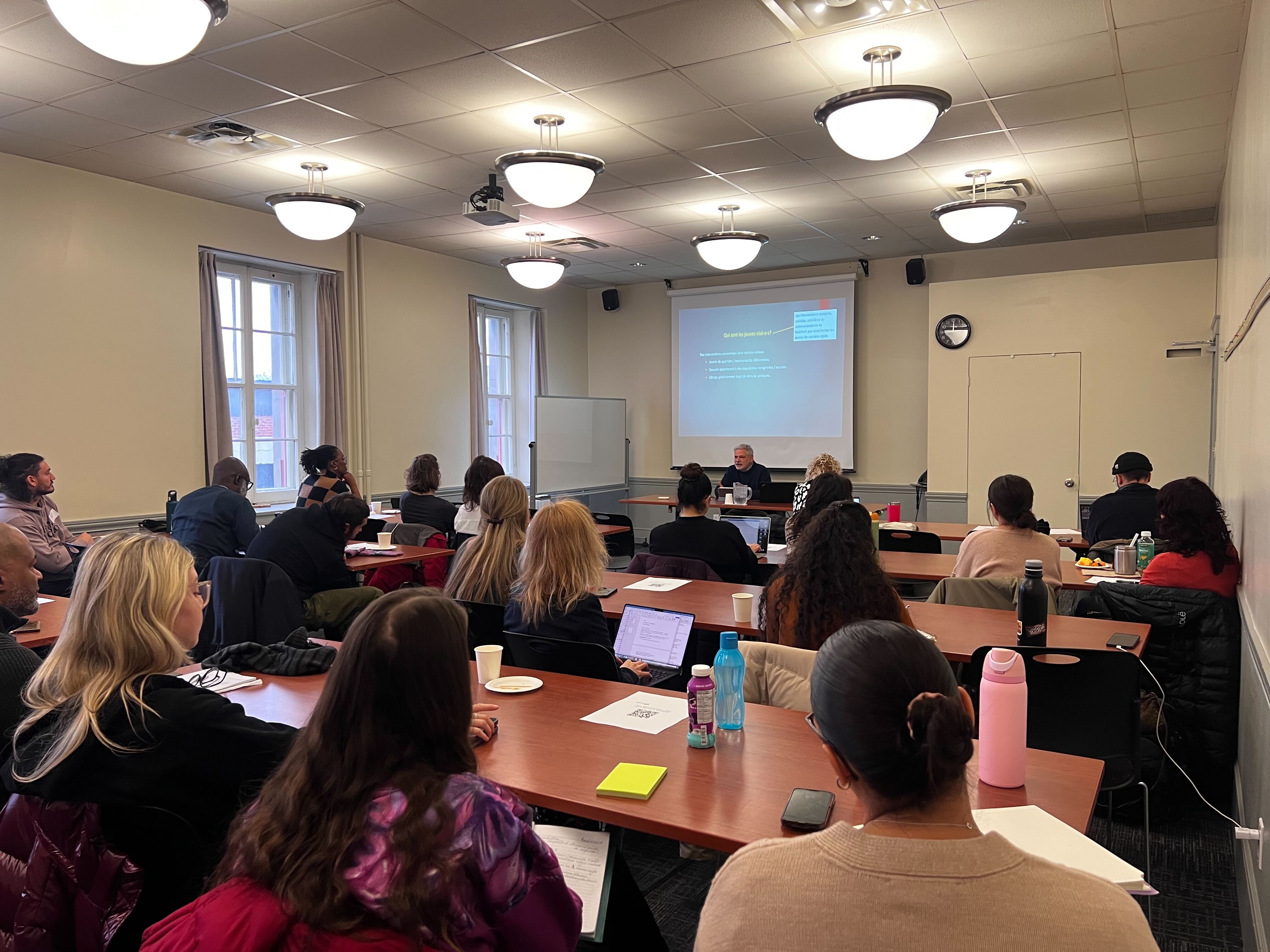
On December 9, 2025, the International Centre for the Prevention of Crime took part in TACMES Day 2025, organized by the Table de concertation contre l’exploitation sexuelle des mineurs (TACMES) at the Centre des mémoires montréalaises (MEM) in Montreal. This event brought together community organizations, practitioners, researchers, and institutional partners to strengthen intersectoral ties, promote knowledge sharing, and develop common tools for the prevention and intervention against the sexual exploitation of minors. 

Clear and Ambitious Objectives 

The day pursued several complementary objectives: 

  • Share experiences and innovative practices among TACMES members; 
  • Strengthen a common vision focused on the well-being, dignity, and rights of young people; 
  • Support the development of collective tools by and for intervention sectors; 
  • Deepen reflections on priority issues, including sexual and gender diversity and the realities of Indigenous communities. 

A Dynamic and Collaborative Format 

The morning session, facilitated by Dynamo, created a relational framework conducive to dialogue through activities of recognition, gratitude, and collective reflection on shared values. The afternoon, led by TACMES members, was dedicated to project presentations, group discussions, and the launch of new tools. 

ICPC’s Active Role 

ICPC’s participation reflects its commitment to actively contributing to TACMES’ collective work. Discussions identified several potential areas of collaboration: 

  • Sharing best practices, including innovative prevention approaches; 
  • Supporting the development and evaluation of joint projects; 
  • Strengthening networking among stakeholders and cooperative work; 
  • Integrating young people’s voices and ensuring their well-being in all initiatives. 

A Dynamic Driving Transformation 

TACMES Day 2025 reaffirmed TACMES’ central role as a safe, inclusive, and mobilizing space, capable of bringing stakeholders together around a common vision based on respect, dignity, and the well-being of young people. For ICPC, this participation was a strategic opportunity to strengthen ties with community and institutional sectors, enrich its reflections on violence prevention, and contribute to collaborative dynamics that foster lasting transformations.
A training coordinated by the ICPC to strengthen trust between youth and police 

On December 2, 2025, the RÉSAL-Réseau d’échange et de soutien aux actions locales (Local Action Exchange and Support Network) held its final capacity-building activity of the year, funded by Prévention Montréal (City of Montreal). This event, coordinated by the ICPC, was the second edition of a training initially offered last October. The session, held at the Centre St-Pierre in Montreal, focused on the theme “Youth and Police: Understanding and Reducing Cycles of Distrust” with the expertise of Mr. Victor Armony, Full Professor at UQAM and researcher at CRIDAQ.

A space for dialogue and reflection

Aimed at youth workers, educators, community workers, outreach workers, and professionals working on crime prevention issues, the session addressed persistent tensions between young people and the police. Some participants highlighted challenges related to resource availability and the adaptation of tools to the realities of youth. They expressed an urgent need for institutional and political support to better assist young people.

Key Findings That Stand Out

Discussions revealed several cross-cutting issues:

  • Widespread Distrust: A single negative interaction with the police can undo months of relationship-building with youth. Participants emphasized that young people feel underrepresented and lack confidence in institutions, fueling a sense of exclusion. This lack of trust does not only affect youth; it also extends to professionals, who sometimes encounter difficulties in collaborating effectively between institutions. 
  • Bias and Stereotypes: Certain institutional practices and incomplete data contribute to disproportionately targeting specific neighborhoods or communities. In practical terms, this means that youth from racialized or disadvantaged backgrounds are more closely monitored than others, reinforcing stereotypes and creating an atmosphere of suspicion. 
  • Invisible Violence: These are not physical acts but include microaggressions (small gestures or comments that demean), ambiguous relationships between youth and institutions, and double victimization. For example, when a discrimination complaint is ignored or minimized, causing the victim to suffer a second injustice. Such situations undermine trust, particularly among racialized young women. 
  • Lack of Adapted Tools: current systems do not always meet the realities of youth. Participants noted the absence of spaces where young people can express themselves, such as youth committees in certain boroughs. This gap limits their ability to voice needs and develop critical thinking. 
  • Disconnect Between Police and Communities: Many officers lack a deep understanding of local dynamics, which widens social and cultural gaps. Participants emphasized the need for collaboration without hierarchy among stakeholders: police, schools, community organizations, and social workers working side by side.
  • Fragmented Institutional Language: Misunderstandings around terms like “prevention” or “risk” complicate coordination. For example, what the police consider “prevention” may differ from how a community organization interprets it, leading to inconsistent interventions.

These findings show that distrust stems from a combination of individual, institutional, and structural factors. 

Moving Forward 

The training identified concrete steps: strengthen inter-institutional coordination, create spaces for youth participation, develop adapted tools, and train stakeholders to recognize their biases. Participants emphasized the need for “shared language” and a systemic understanding of relationships between institutions. 

ICPC’s Strong Commitment 

This session wraps up RÉSAL’s 2024–2025 training series, designed to equip local stakeholders with tools to tackle complex challenges around youth violence. For the ICPC, these initiatives are key to building local capacity and encouraging collaborative, community-driven solutions.

Ann Champoux at the First International Congress on Reintegration and Prevention in Juvenile Criminal Justice

Ann Champoux as keynote speaker

On October 30 and 31, 2025, Ann Champoux, Director General of the International Centre for the Prevention of Crime (ICPC), took part in the First International Congress on Reintegration and Prevention in Juvenile Criminal Justice, held at the Fox Centre in San Francisco del Rincón, Guanajuato, Mexico. 

This mission marked Ms. Champoux’s first visit to Mexico as Executive Director of the ICPC. She was accompanied by Mr. Oscar Figueroa, Strategic Consultant for Latin America, who regularly represents the ICPC at various events and conferences across the region. 

Invited to deliver the opening address, Ms. Champoux joined more than 1,200 participants from nine countries across the Americas and beyond. Her participation reflected the ICPC’s commitment to strengthening international cooperation in crime prevention and juvenile justice.

A meaningful experience both professionally and personally

Visit of a rehabilitation centre (in the middle, Ann Champoux and Oscar Figueroa)


In her remarks, Ms. Champoux emphasized the importance of early prevention, community support, and international collaboration to help young people in conflict with the law reintegrate into society.

This topic resonates deeply with me, both as Executive Director of the ICPC and as a mother,” she said.


Inspiring Action and Building Lasting Partnerships

Moved by the strong participation of university students, Ms. Champoux expressed hope that her message would encourage the next generation to continue their efforts in preventing youth delinquency and promoting safer communities. She also highlighted the quality of strategic meetings and discussions held alongside the congress, which could lead to future collaborations across the region.

Empowering the next generation of crime prevention leaders

Expanding the ICPC’s reach

This first mission to Mexico helped raise awareness of the ICPC’s mission and expertise among new partners, while reaffirming its commitment to supporting local initiatives in Mexico and throughout Latin America.

We share a common goal: to build more humane and inclusive public policies for safer communities,” concluded Ann Champoux.

This participation marks an important milestone for the ICPC in developing lasting partnerships and strengthening its network across Latin America. 

ICPC Presents Its National Study on Public Transit Safety at CUTA’s Annual Conference and Transit Show

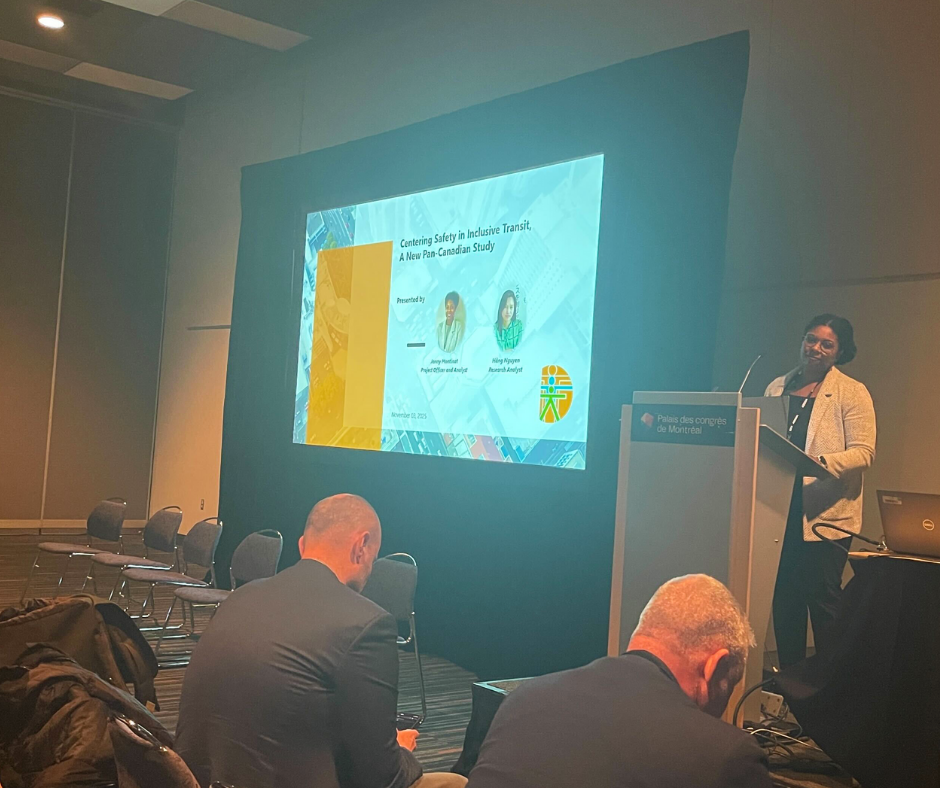
On November 3, 2025, Janny Montinat and Hang Nguyen, analysts at the International Centre for the Prevention of Crime, took part in the Annual Conference and Transit Show organized by the Canadian Urban Transit Association (CUTA) in Montréal.

They presented the approach and objectives of a national study led by the ICPC on safety and mobility in public transit systems across five major Canadian cities. The study, planned over a three-year period, is currently in its first year, which focuses on a literature review, expert consultations, and the preparation of on-site visits. 

By joining the ongoing discussions among transport authorities, researchers, and municipal representatives, the ICPC shares its expertise in crime prevention to help develop sustainable solutions to urban safety challenges.

For more information on the CUTA Annual Conference, visit cutaactu.ca.

The ICPC showcases its expertise in criminal analysis at an international seminar

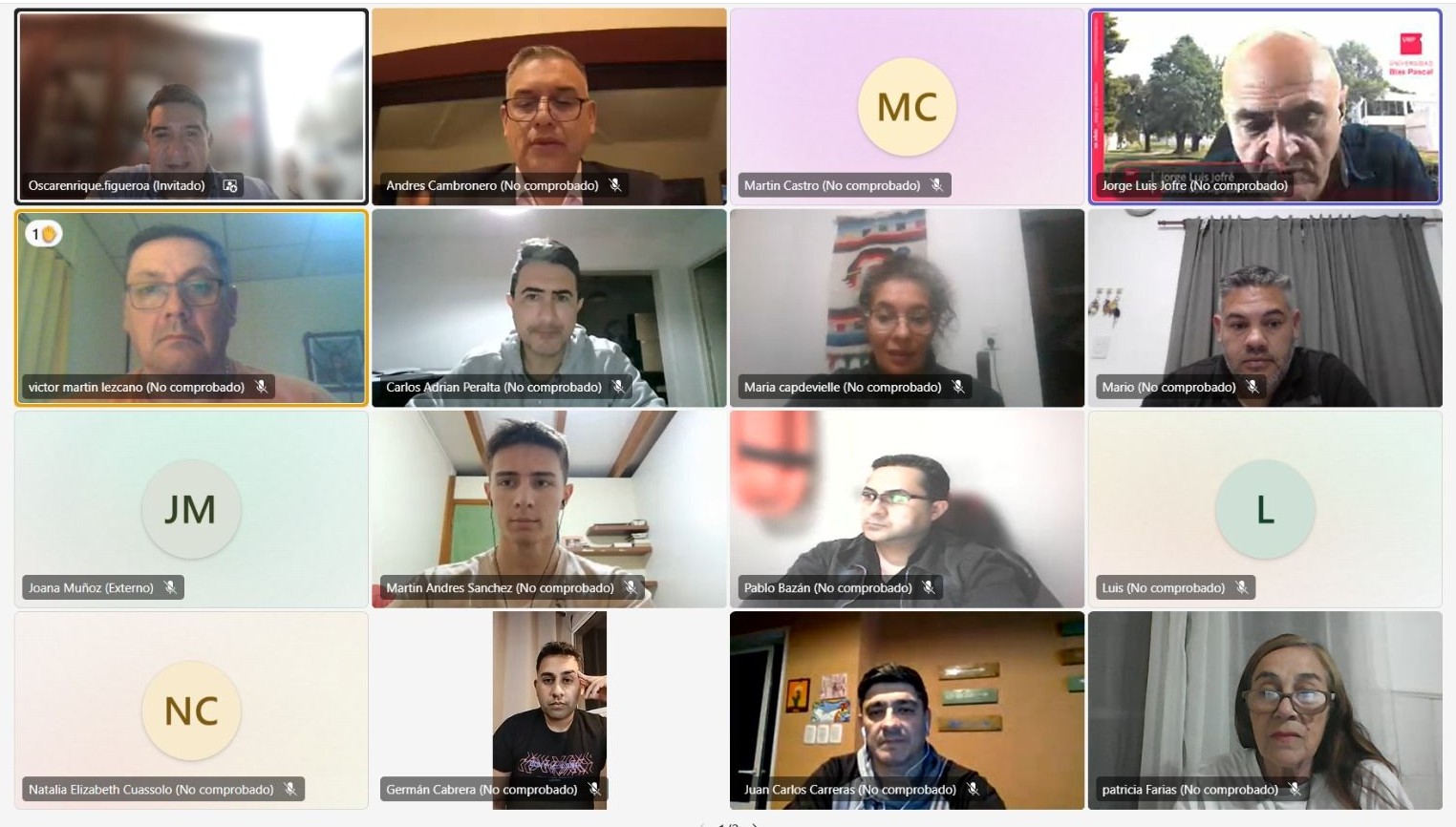
On October 1, 2025, Blas Pascal University (UBP) hosted an online international seminar titled “Criminal Analysis for Citizen Security: Latin American Experiences.” During the event, Óscar Figueroa Ulloa, Strategic Consultant for Latin America at the International Centre for the Prevention of Crime, presented the approaches and tools used by the Centre to strengthen crime analysis and prevent violence in urban areas.

The seminar brought together public safety experts and academic researchers to foster cross-sector dialogue and share effective practices. Speakers included Commissioner General Andrés Cambronero, Director General of Information Technology and Statistical Analysis for the Córdoba Provincial Police in Argentina. Jorge Luis Jofré, Director of the Degrees in Citizen Safety and Forensic Sciences and Criminal Investigation at the UBP, also participated in the discussions.

These exchanges reinforced regional efforts in urban safety and highlighted the critical role of data in the development of informed public policy. 

A contribution aligned with ICPC’s mission

The UBP joined the ICPC’s international network in 2024. By participating in this seminar, the Centre reaffirms its commitment to supporting international cooperation and promoting prevention as a key pillar for citizen safety. This collaboration also underscored a shared dedication to enhancing safety and quality of life in communities across Latin America through education, research, and international cooperation. 

The ICPC participated in the 2024 Conference of the Canada Centre for Community Engagement and Prevention of Violence

The ICPC was pleased to take part in the 2024 Conference on Countering Radicalization to Violence, the theme of which was ‘Local Responses to Global Pressures’. This event, organized from Monday, May 27, to Friday, May 31, 2024, in Montreal, was an exceptional opportunity for us to reinforce our network and collaborate with international experts in the field.  

Speech by the Honourable Dominic LeBlanc, Minister of Public Safety Canada

Organized by the Canada Centre for Community Engagement and Prevention of Violence, the author of Canada’s National Strategy to Counter Radicalization Leading to Violence, the event brought together nearly 400 participants from 15 countries working in the fields of health and the prevention of radicalization and extremism at both national and international level, for a series of conferences and networking sessions.   

This week of enriching exchanges marked an important opportunity to improve our initiatives to prevent radicalization and violence. We look forward to engaging in further work with new collaborators to strengthen our capabilities and continue to develop effective strategies and solutions to counter these phenomena, inspired by the good practices that have been shared.

The ICPC was at the the 8th edition of the “Security, Democracy & Cities” conference in Belgium

As part of a mission to France and Belgium in March 2024, the ICPC had the pleasure of taking part, from March 20 to 22, in the eighth edition of the “Security, Democracy & Cities” conference organized by its partners, the European Forum for Urban Security and Safe.brussels, which was held in Brussels, Belgium. The event brought together 700 participants from 26 countries, including 135 locals from the Paris-Brussels region, to discuss the major issues of safety in European cities.   

Inaugurated by the Minister-President of Brussels, Rudi Vervoort, the conference addressed critical challenges such as territorial warfare, drugs, and insecurity, exacerbated by misinformation, the far-right, and terrorism, underlining the need for crisis management and inter-regional collaboration. With the participation of regional and Catalan key stakeholders, the conferences focused on drug trafficking, security by design in public spaces, and the essential role of citizen mobilization against drug-related violence. 

A meeting between Ann Champoux, Director General of the ICPC, and international partners such as Dina Husseini, Head of Section in the Division for the Reduction of Inequalities and Inclusive Living Environments at the City of Montreal, and Jumma Assiago, Coordinator of the Safer Cities Programme for UN-Habitat, led to explore future collaboration on the integration of inclusive and community-based strategies in crime prevention in major cities.   

Dina Husseini (City of Montréal), Jumma Assiago (ONU-Habitat) and Ann Champoux (ICPC)

Ms Champoux was also delighted to meet Anna Rau, Executive Director of the German-European Forum for Urban Safety (DEFUS), who has recently joined the ICPC board. Exchanges between Elizabeth Johnson, Executive Director, and Yves Van De Vloet, Associate Expert, both from EFUS, also provided an opportunity to discuss the various perspectives on the day-to-day challenges of urban safety. 

Anna Rau (DEFUS), Ann Champoux (ICPC), Yves Van De Vloet and Elizabeth Johnson (EFUS)

In addition, discussions with important figures such as Jean Spinette, Mayor of the municipality of Saint-Gilles in Belgium, and Sophie Lavaux, Executive Director of Safe.brussels, were particularly enlightening, marking a mutual recognition of the crucial importance of urban safety for democracy and social well-being.  

Jean Spinette (municipality of Saint-Gilles), Sophie Lavaux (Safe.brussels) and Ann Champoux (ICPC)

In conjunction with the conference, the ICPC held its 26th annual general meeting of members on March 20, both online and in person in Brussels, where two new members were welcomed for a new mandate on the ICPC board: Anna Rau, Executive Director of the German-European Forum on Urban Security, and Barbara Holtmann, Director of Fixed Africa and former member of the Board. This was an opportunity for our Director General to present some of the highlights of the past year, newly published reports, news from our network, and participation in/organization of international events. 

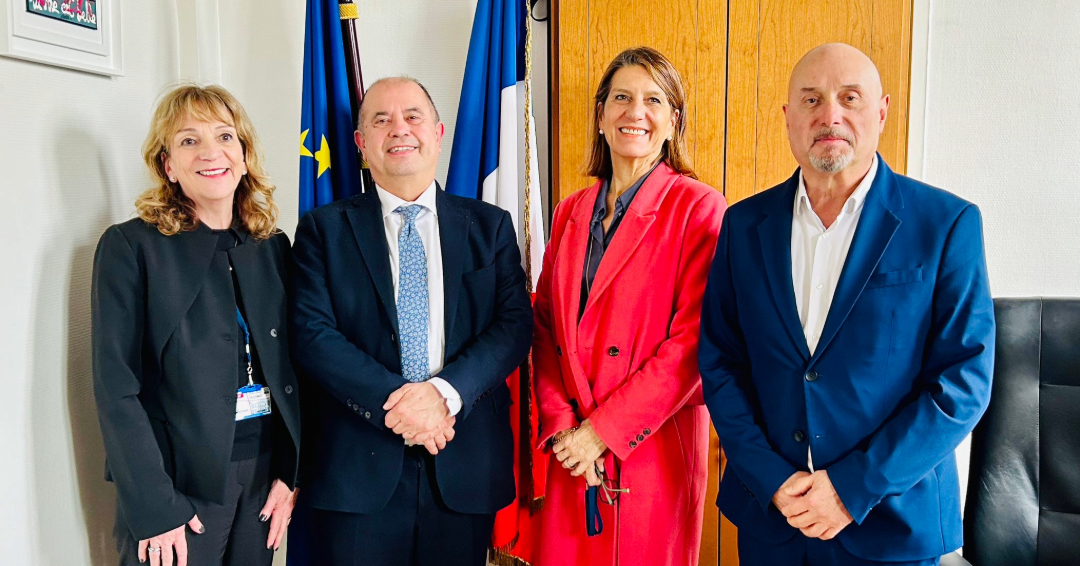
Also, during this mission, Ann Champoux as well as two members of the Board of Directors, Frédérique Porterie, President of the Board and Public Prosecutor of Bordeaux, as well as Jean-Luc Besson, Vice-President of the Board and Expert in statistical dissemination and territorial analysis at the Ministry of the Interior, met with Étienne Apaire, Secretary General of the Interministerial Committee for the Prevention of Delinquency and Radicalisation. The meeting was held in Paris, France, to continue discussions on avenues of collaboration with France. 

Ann Champoux (ICPC), Étienne Apaire (SG –CIPDR), Frédérique Porterie and Jean-Luc Besson (ICPC)

Proceedings of the 7th International Conference of the ICPC on the security of mobility: a review of the paths of action, innovation and prevention

From October 4 to 6, 2022, the International Centre for the Prevention of Crime organized the 7th International Conference on Observation, Analysis and Prevention of Insecurity, in collaboration with the French Ministry of Transport, the International Union of Railways, the International Association of Public Transport, the Union of Public Transports, Safe.brussels, the Institute of Higher Studies of the Ministry of the Interior, the government of Quebec and the government of Canada. The event took place at the headquarters of the International Union of Railways in Paris.

The main theme of the conference was Security in Mobility. Through a collaboration with French, Belgian, and Canadian partners, the event succeeded in presenting various approaches and raising awareness on multiple issues surrounding safety and insecurity in mobility. This conference revealed the importance of the risks and challenges faced by public transport, which is part of our daily lives.

The conference included several workshops addressing a wide range of topics related to safety and insecurity in mobility. These topics included the feeling of insecurity, public transit harassment, crisis management in the face of the terrorist threat, verbal abuse and aggression against staff, fare evasion, crisis management, and technological prevention tools, social prevention of violence and incivilities, crisis management: sharing experiences on current crisis situations, and situational prevention and the CPTED approach in mobility. 

These proceedings are a complete synthesis of all the information shared during the activities, as well as the exchanges between the different speakers and the participants. They are now available for consultation.

The main points to remember are as follows:

  1. The issue of harassment on public transport is a major problem, particularly detrimental to women.
  2. Crime does not occur randomly; it is influenced by circumstances and factors that facilitate criminal opportunities and acts of delinquency.
  3. There is a paradoxical cohabitation between individuals in great precariousness and users who pay for a service and naturally expect a certain level of quality.

You can access the proceedings by clicking on the corresponding links:

English version

French version

Spanish version

Participation of the ICPC in a session of exchange of experiences and innovation of the Inter-American Community of Crime Observatories

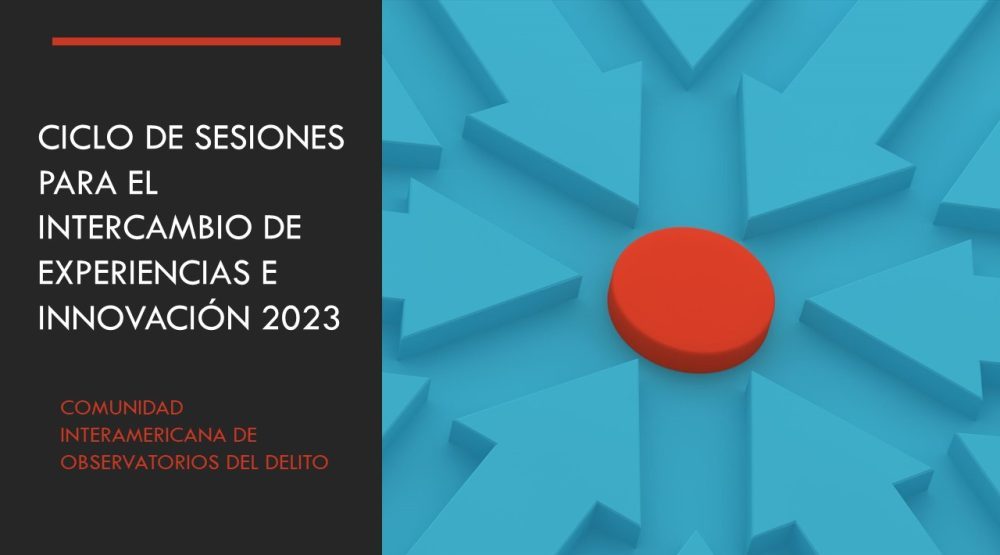
The first session of the 2023 Inter-American Community of Crime Observatories, Department of Public Security of the Organization of American States, was held on April 26. The ICPC was represented at the event by Oscar Figueroa, the organization’s Latin American consultant.

The session focused on the transfer of prevention and security models between two municipalities in the region, and the important role played by Observatories in the design, implementation, and monitoring of projects. Representatives from the municipality of Peñalolén (Chile) and the municipality of Nezahualcóyotl (Mexico) shared their respective models of rights promotion and social prevention, as well as their model of social proximity, and also shared the lessons learned from the exchange and transfers carried out. Security experts emphasized the importance of collaboration and communication between crime observatories to achieve effective security solutions.

The CIPC on an international mission in Dubai

Keeping with its international character, the ICPC was invited on a mission in Dubai to participate in the World Police Summit 2023, from March 7 to 9, organized by the Dubaï police. Other meetings were concluded throughout the week, marked by knowledge sharing from different crime-related networks worldwide.

On March 7, ICPC Director General, Ann Champoux, offered a presentation to nearly 200 people about the work the organization has done over its nearly 30-year existence. During her conference, “Challenges facing the crime detection and prevention systems: a road map for the future”, the Director General also presented the positive experience of the Urban Safety Laboratory and its successful implementation within the City of Montreal. The perspective of working in collaboration with police services, under this governance model, to provide accurate data analysis for the aim of preventing crime in a city, generated the interest of the audience.

On Wednesday, March 8, a meeting with the Canadian Consul in Dubai was held at the Canadian Consulate offices. Ann Champoux and Jean-Philippe Linteau explored the possibilities of development and collaboration in crime prevention, analyzing the situation in the region and possible local partnerships.

On March 9 morning, Ms. Champoux met with Major Ahmed al Marri and Major Mohamed Al Hammade from Dubai Police’s Crime Prevention Department. They discussed the various crime issues in both countries, mainly related to cyber violence and ICPC’s expertise in security in mobility. Thank you to the Dubai Police for your interest in our work and for possible partnerships between our institutions.