3rd RÉSAL colloquium: Nearly 100 participants discussed the prevention of cyber-violence

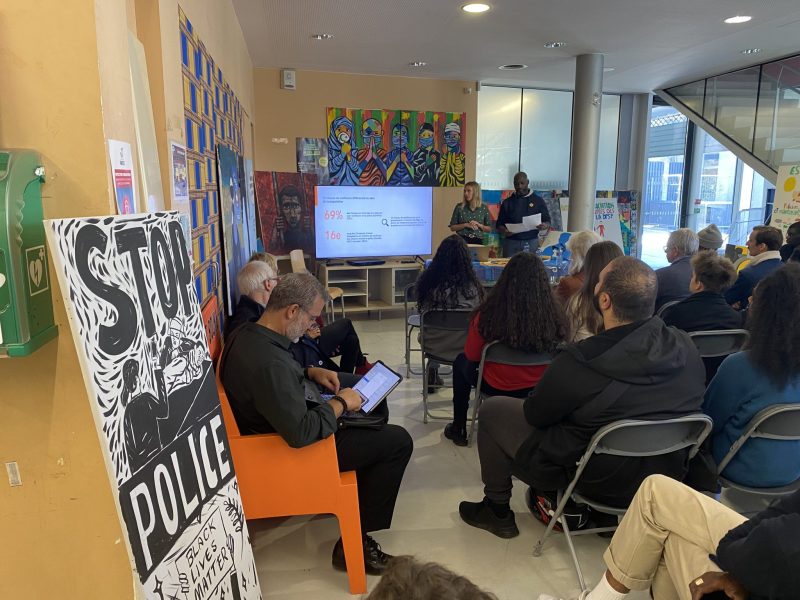
On Wednesday, February 15, about a hundred people participated of the Réseau d’échange et de soutien aux actions locales  (RÉSAL), of which the ICPC is a coordinating member. The colloquium, which took place at the Centre St-Pierre, in Montreal, focused on the prevention of cyber-violence. The day was filled with engaging meetings, discussions, workshops and “braindates”.

The event began with opening remarks from Roselyne Mavungu, Director General of the Centre for the Prevention of Radicalization Leading to Violence (CPRLV), who highlighted the critical need for organizations and institutions to collaborate and work together in preventing cyber-violence, particularly among young people. Pier Alexandre Lemaire, Urban Safety Advisor for the City of Montreal’s Diversity and Social Inclusion Department, followed with an overview of RÉSAL’s past activities, emphasizing the importance of networking and the value of face-to-face interactions after three years of primarily online engagement.

Khaoula El Kahlil, Research Advisor at the CPRLV, moderated the first panel of the day, on ”Crossed views on cyber-violence”, and featured experts from various fields. Detective Sergeant, Maya Alieh, of the Montreal Police Department (SPVM) gave a presentation on key considerations to keep in mind regarding cyber investigations and how to intervene when faced with incidents of cyber violence on social networks. Stéphane Villeneuve, professor and director of the program in digital integration in the school environment at the Université du Québec à Montréal (UQAM), presented research on cyberbullying in the school environment as well as a means to better understand and prevent these situations, i.e. a training program offered to Quebec teachers. Dominique Gagné and Dave Poitras, scientific advisors from the National Institute of Public Health of Quebec (INSPQ), concluded the panel with a presentation on findings and proposed solutions to prevent cyber-violence in relationships

After the first panel, both panelists and participants were divided into different groups to delve deeper into current issues and best practices for preventing cyber-violence. These discussions were organized by the event’s partner, Braindate, allowing participants to share their experiences and insights with each other.

The afternoon was divided into four workshops: The first workshop, facilitated by Jeanne Plisson, Community Support Coordinator, and Sarah Grenier, Community Support Advisor, at the CPRLV, addressed ”online hate speech”. In this workshop, participants learned about definitions of hate speech, the different possible forms that hate can take and the prevailing motives for it to occur. They also presented different tools used to prevent and respond to hate speech incidents, primarily in schools.

The second workshop offered, led by Akim Laniel-Lanani, co-founder of the Clinique de cyber-criminologie  at the School of Criminology at the Université de Montréal (UdeM), focused on “cyber-hygiene”. Akim presented an overview of the use of social networks by youth before discussing useful tools and resources available to promote healthy online habits.

UdeM criminology professor Isabelle Ouellet-Morin led a third workshop that  provided participants with an opportunity to learn more about the research that led to the creation of the +Fort” mobile application. This app, a collaboration of several Quebec researchers created by the Axel Centre, aims to help youth and school professionals combat and overcome harassment and cyberstalking.

The fourth workshop of the day, “Getting Connected to Equality”, was led by Léna Gauthier-Paquette, support officer for the sexuality education program of L’Anonyme. The workshop focused on a project that aims to equip youth aged 12 to 25 to develop egalitarian, safe and consensual relationships by initiating a reflection on the sharing of real and virtual public space between genders. This activity allowed participants to understand the manifestations of stereotypes, power dynamics and sexism online through an overview based on the organization’s research. The day concluded with exchanges between participants and closing remarks from the CPRLV.

The proceedings are available in French and English.

The ICPC at the 2023 World Police Summit in Dubai

It is with great pride that our General Director, Ann Champoux, has accepted the invitation to participate in the World Police Summit 2023 in Dubaï, which will take place from March 7 to 9. We are grateful for this opportunity to speak about ICPC’s expertise in crime prevention. On March 7, she will take part in a discussion on “Challenges Facing Crime Detection and Prevention Systems: A Roadmap for the Future”.  

The 2nd edition of the World Police Summit, organized by the Dubai Police, offers a high-level platform to discuss the pressing priorities facing police forces and law enforcement agencies considering evolving forms of criminal activity, the increasing availability and accessibility of sophisticated technologies, and shifting criminal motivations. 

For more information on the World Police Summit: https://www.worldpolicesummit.com/ 

ICPC participates in the fall PNI Coordination Meeting

On December 13, ICPC participated in the fall 2022 coordination meeting of the United Nations Crime Prevention and Criminal Justice Programme (NCPJ) Network as part of its role in the Commission on Crime Prevention and Criminal Justice (CCPCJ) of the United Nations Office on Drugs and Crime (UNODC).

The members of the network presented their recent and ongoing activities, reviewed the “Kyoto Declaration on Advancing Crime Prevention, Criminal Justice and the Rule of Law” and to discuss the presence of the PNI at the 32nd session of the CCPCJ to be held in 2023.

The ICPC in France for its 7th international conference

On October 5 and 6, 2022, the 7th International Conference on Observation, Analysis and Prevention of Insecurity, organized by the International Centre for the Prevention of Crime, in collaboration with the French Ministry of Transport, the International Union of Railways, the International Association of Public Transport, the Union of Public Transports, Safe.brussels, the Institute of Higher Studies of the Ministry of the Interior, the government of Quebec and the government of Canada, took place in Paris. The conference was held at the headquarters of the International Union of Railways.  

For this 7th edition, the theme of the conference was: Security in Mobility.

To mark the beginning of this 7th edition of the international conference, an opening cocktail was held at the residence of the Canadian Ambassador in Paris. Our partner, the Canadian Embassy in France, and Amy Baker, Deputy Head of Mission, welcomed partners and speakers, for the first meeting between all the participants of this conference. 

The event included plenary sessions, workshops, and field visits. The conference gathered many participants from all over the world (nearly ten nationalities were represented among more than fifty speakers) concerned by the observation, the analysis, and the good practices related to the improvement of security in mobility, such as political agents, researchers, representatives of transport operators, NGOs, and institutional representatives.

Nearly 180 participants attended the conference, coming from 138 different companies and representing more than 20 countries from 4 continents.  

The ICPC would like to thank the Government of Quebec and the Government of Canada for their financial support in the development of this conference. We were pleased to have Omar Alghabra’ support, Minister of Transport of Canada, via a video contribution and to host Michelle Boisvert, Delegate General of Quebec in Paris, in person, taking part in the opening remarks.

The opening plenary of the conference was introduced by the ICPC. Michelle Côté, Director of Research, and Florilène Cornier, Analyst and Project Officer, presented the conceptual framework of the conference around the current issues of safety in mobilities that are spread across the world. It was the opportunity to share the organization’s different expertise on the topic as well as the importance of a differential analysis of these safety issues from one country to another.  

During these two days of conferences, workshops were dedicated to specific phenomena, such as the fight against fraud, harassment in transport, prevention against the terrorist threat and crisis management, analysis of crime in transport and aggression to staff. These topics, among many others, were addressed by various representatives of transport operators discussing key security issues and how to prevent them.   

Discussions about effective tools to measure, analyze and study the phenomenon, examples of strong pathways and platforms for knowledge transfer, presentations of crime and safety approaches specific to mobility, effective evaluation as well as dissemination of best practices, were also part of these exchanges. 

Participants were also able to select and participate in one of the five different visits and demonstrations to further their practical knowledge:  

  • Two dog team demonstrations, cyno-detection, and cyno-attack by the Société nationale des chemins de fer français est l’entreprise ferroviaire publique française (SNCF).  
  • A demonstration of intervention techniques by the SNCF.  
  • A training offered by the Régie autonome des transports parisiens (RATP) on awareness for victims of harassment. Presentation of the Stand UP project and the 5D method in order to learn how to react safely in a harassment situation in a public place, as a victim or a witness.   
  • A visit organized by the RATP of the security devices and the security headquarters at the Gare de Lyon metro station. This visit allowed experts to discover the operating methods of security interventions.   
  • Presentation of a social collection bus by the RATP. This presentation was an opportunity to discover an original prevention system for reaching out to homeless people and fighting social exclusion and ensuring the safety of its transport systems.    

Being at its seventh event, this international conference has truly become a meeting point for crime observation and crime analysis. 

It should be noted that the proceedings of the conference will soon be available online.  

For any questions or requests, please write to info@cipc-icpc.org. 

The ICPC met with its network in France, in Bordeaux and Lille

After its visit in May, the ICPC was back in Europe for a mission. During the month of October, Director General, Ann Champoux, met with several members, partners and new collaborators to discuss opportunities for collaboration in crime prevention. 

Meetings at Bordeaux City Hall

Following the visit of Amine Smihi, Deputy Mayor of Bordeaux, in September to the ICPC office in Montreal, it was the ICPC’s turn to visit Bordeaux. As part of her mission in France, Ann Champoux met with Amine Smihi to discuss opportunities for collaboration in crime prevention.

The ICPC was welcomed at the Bordeaux City Hall to meet with Mr. François Mesure, Director General of the Bordeaux City Hall and Ms. Eléonore Becat, Deputy Director and Head of the Bordeaux CLSPD.

In the afternoon, the Director General took part in a visit of the Urban Supervision Center (CSU) where she was able to talk with Mr. Laurent Lapegue, Director of the Municipal Police and Public Tranquillity. They were able to discuss issues related to urban security and the feeling of insecurity of citizens.

Participation in the ethical committee of video protection – Bordeaux City Hall

At the end of the day, ICPC had the chance to attend and take part in the ethical committee of video protection at the town hall, in the presence of the Mayor and Mr Smihi.

Assises de la sécurité des territoires, October 12-13, in Lille

The Director General of ICPC, Ann Champoux, attended the meeting of the security of the territories in Lille. The French Forum for Urban Security (FFSU) presented an updated version of the White Paper for territorial security integrating all the new recommendations and practices of local actors.

Also, a presentation of the prevention-security devices in Lille and a national meeting of prevention-security directors and coordinators were on the program.

We would like to thank all our collaborators for their welcome and these profitable exchanges. 

Police-population seminar organized in collaboration with Espoir 18 in Paris

On October 11th and 12th, a seminar on improving communication between police and the public took place in Paris. The event was organized through a partnership between ICPC and the Parisian organization Espoir 18.  The objective of this seminar was to present successful initiatives undertaken internationally on constructive dialogue between law enforcement and community members, through round tables, an audience of academics, police officers, and civil society stakeholders.

Since 2019, ICPC and Espoir 18 have been collaborating on a project on improving police-population dialogue, with a particular emphasis on the young public and minority groups in their relationship with the police institution. This partnership is therefore part of a research on ways to improve this type of dialogue, to document innovative experiences and practices at the international level and to promote knowledge transfer.  This year, several activities were carried out as part of this collaboration: a review of international good practices was co-authored, ICPC hosted the Espoir 18 team in Montreal as part of its North American theatre tour, and this seminar which took place in October.

The seminar included :

  • The presentation of the practice review “Improving Police-Population Dialogue: An Introduction to International Issues and Practices” produced by ICPC and Espoir 18, with the support of the Open Society Foundations;    
  • The presentation of successful national (in France) and international initiatives along with round table discussions; 
  • The screening and debate of a documentary made by the young of Espoir 18 on racial profiling; 
  • Stories of young people, families, and police officers on the relationship between the police and the population; 
  • An evening debate on possible solutions to improve the police-population dialogue and a future action plan to be put in place.  

The development of an action plan for the period 2023 to 2025 based on the exchanges and lessons learned from the seminar will be produced for the next phase of this collaboration.

Participation of ICPC in the presentation of Daniel Cunjama’s book

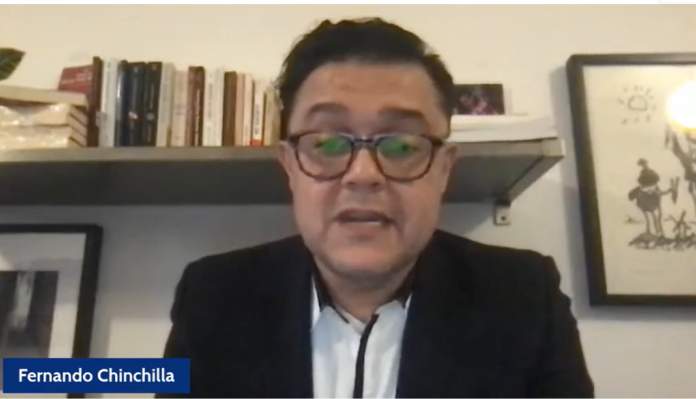
Fernando A. Chinchilla, Senior Analyst, participated on behalf of the International Center for the Prevention of Crime (ICPC) in the web presentation of the book by Daniel Cunjama, teacher-researcher at the Instituto Nacional de Ciencias Penales (INACIPE) and the Instituto de Estudios Criminológicos Transdisciplinarios (IECRIMT), “Manual de Prevencion del Delito“.  

This book published by Progettomondo, INACIPE and our member, IECRIMT, addresses the technical capacities required by institutional actors involved in the design, implementation and evaluation of crime prevention programs as the first point to be considered in the development of an evidence-based prevention policy.  

To view the presentation online: https://www.youtube.com/watch?v=-JItsDydsgs  

Thanks to Daniel Cunjama and INACIPE for the invitation.   

25th Annual General Meeting of ICPC Members

On the occasion of its presence in France for the 7th International Conference on the Observation, Analysis, and Prevention of Insecurity, the ICPC held its Annual General Meeting of Members in Paris on October 4, 2022.

The Director General, Ann Champoux, presented the highlights of the past year of the organization, new reports published, news from its network, as well as the organization of international events. The meeting was also an opportunity to present the future actions of the organization based on the strategic orientations for the next few years.

Chantal Bernier was named an honorary member of ICPC in recognition of her dedication to the Centre as president from 2010 to 2018 and her valuable contribution to the field of crime prevention.

The meeting included a review of the ICPC’s financial and annual statements for the year 2021 and the introduction of the new President of the Board of Directors, Frédérique Porterie.

To see the current Board of Directors: https://cipc-icpc.org/le-conseil-dadministration/.

Launch of the 7th International Conference of the ICPC

7TH INTERNATIONAL CONFERENCE ON THE OBSERVATION, ANALYSIS AND PREVENTION OF INSECURITY: SECURITY IN MOBILITY

Paris, October 4, 2022 – The ICPC, in collaboration with the French Ministry of Transport, the International union of railways, the International Association of Public Transport, the Union of Public Transports, Safe.brussels, the Institute of Higher Studies of the Ministry of the Interior, the government of Quebec and the government of Canada, announces the opening of its 7th International Conference on the Observation, Analysis and Prevention of Insecurity, on October 5 and 6, 2022, at the premises of the International Union of Railways (16, rue Jean-Rey, Paris).

As part of the series of international conferences on crime observation and analysis organized by the International Centre for the Prevention of Crime since 2007, the 7th edition will focus on the theme of security in mobility.

The event is expected to welcome 200 participants including nearly 50 international speakers. These experts and practitioners will share their knowledge as well as their initiatives and best practices in the prevention of insecurity in mobility.

The conference will address various levels of analysis: global trends in mobility security, national and local government strategies in prevention, working experiences of community institutions and associations, new research approaches, as well as workshops on specific and practical aspects in this field.

It will aim to provide a space for exchange between experts in mobility security in order to identify avenues for innovation, action, knowledge transfer and applied research as well as partnership opportunities between key actors in these fields.

Date and place of the conference: 5 and 6 October 2022, International Union of Railways, 16, rue Jean-Rey, Paris.

The conference program is available at: https://cipc-icpc.org/en/save-the-date-international-conference-october-4-6-2022/

Sources

Vanessa Reggio
Director of Communications and Public Relations
vreggio@cipc-icpc.org

Espoir 18 in Montreal

Since 2019, the ICPC and the Parisian association Espoir 18 have been working closely together on a project on improving police-population dialogue, with a particular focus on youth and minority groups in their relationship with the police institution. The aim of this project was to document inspiring experiences and practices on both sides of the Atlantic, but also to promote the transfer of knowledge and establish collaborations around this theme.  

Espoir 18 is an association that works for the integration and socialization of more than 2,000 young people between the ages of 6 and 30 in certain working-class neighborhoods of Paris, through cultural, artistic, and sports activities. As part of its mission to support success and prevent delinquency, the association is involved in the deployment of a variety of reference initiatives, ranging from the creation of artistic projects to the organization of international mobility trips. 

As part of this collaboration, a team from Espoir 18, consisting of around thirty people, including twenty young people from the association, was in Montreal from 8 to 12 July 2022. This mission was part of a North American tour, notably in Washington and New York, of two reference theatrical performances, Bad Mama and Lettres à Nour, after a year of touring in French cities.   

We are very glad to have welcomed them to Montreal.    

The plays address multiple issues, concerns, aspirations, and realities that contemporary youth go through, especially in certain disadvantaged territories: daily life, radicalization that can lead to violence, identity issues, relationships between generations and with institutions, as well as other subjects. Moreover, Bad Mama is a co-development project, which started in 2019, between young people and youth workers, directed by Farid Abdelkrim, and performed by the theatrical troupe of “Z’improbables” (a troupe of Espoir 18). This artistic initiative became a way for the group to learn to express themselves on sometimes complex subjects. As for Lettres à Nour, it is a play adapted from Rachid Benzine’s novel and directed by him, performed by Farid Abdelkrim and Céline Dély, which aims to deconstruct the ideology of Daech and challenge the certainties of the spectators.  

For the first evening of theatre, which took place on Saturday 9 July at the Union Française de Montréal in Downtown Montreal, nearly 40 people were present to see the plays. The audience also had the opportunity to discuss with the group after the performances.   

On Monday, July 11, Espoir 18 and the ICPC were hosted in Montreal North by the organizations Parole d’excluEs and Hoodstock for a visit to the Pelletier homes, the Parole d’excluEs’ offices, and to the place de l’Espoir. These visits allowed the group to exchange with local stakeholders and to learn more about the realities of the neighborhood.  


In the evening, the second theatrical performance took place at Espace 7000 in Montreal North, welcoming nearly 75 people. The audience also had the opportunity to discuss with the group the issues raised by the plays, the background of these plays, and the impact that this type of engagement has had on the young people since the beginning of the process.   


Thank you to all the participants who attended the events.