The ICPC participates in a meeting of the CORIM

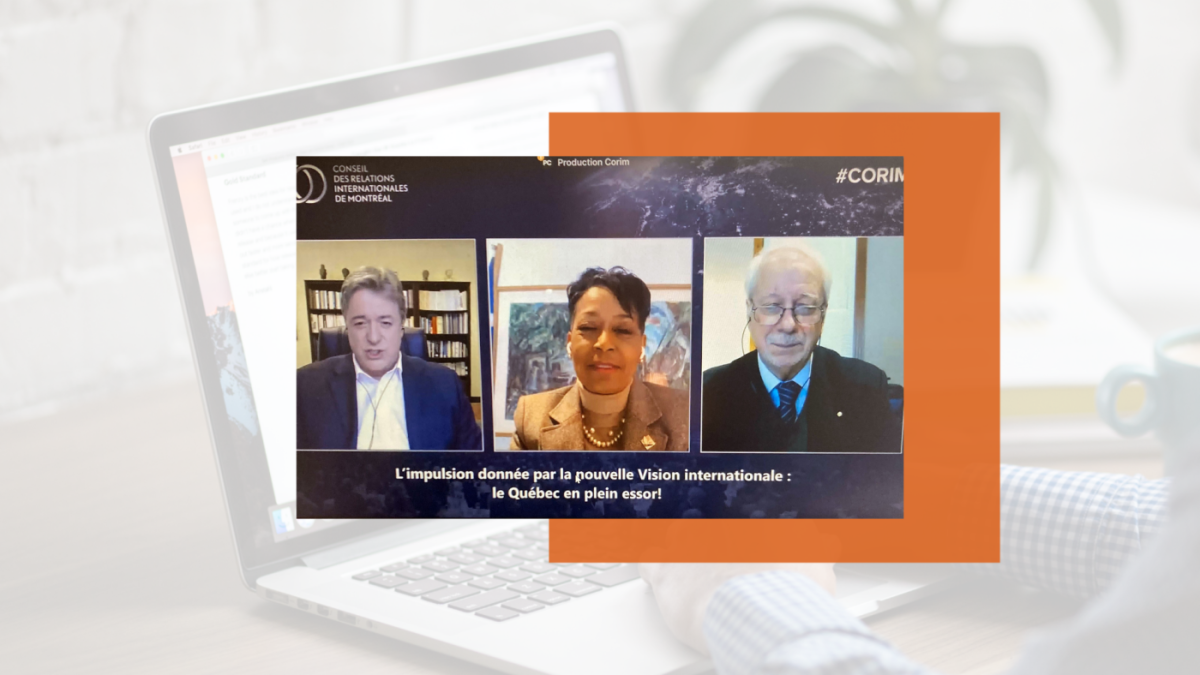
The ICPC is pleased to have attended the presentation “L’impulsion donnée par la nouvelle Vision internationale : le Québec en plein essor!” organized by the Conseil des relations internationales de Montréal (CORIM) of the Minister of International Relations and La Francophonie, Mrs. Nadine Girault, which focused, among other things, on Quebec’s place in the international arena in relation to Quebec’s International Vision.

We would like to thank the CORIM for the invitation.

A new RÉSAL publication

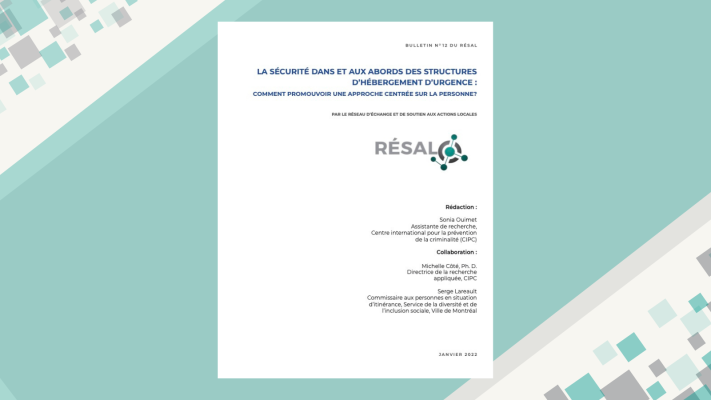
The Réseau d’échange et de soutien aux actions locales (Network for exchange and public action support, RÉSAL), coordinated by the ICPC, has published its 12th bulletin. This bulletin discusses safety in and around emergency shelter structures and poses the question of how to promote a human-centred approach.

This publication draws a portrait of the current state of emergency shelters in Montreal, reflects on the complexity of security within the context of emergency services for the homeless, describes the problem of social cohabitation, looks at other problems specific to these services’ clientele, presents an approach to be developped, explores the limits of private security, and situates the issue within COVID-19 and its related health measures.

Read the bulletin (available in French)

A new intern at the ICPC

In early January, the ICPC welcomed a new member to its team: Mavrick Langlois.

Mavrick, Research Assistant Intern, is currently in his third and last year of a bachelor’s degree in Criminology at the Université de Montréal, Analysis profile. He has experience as a research assistant from the International Centre for Comparative Criminology and also works part time as a case management assistant at the Société de criminology du Québec. As part of his internship, he will work on violence prevention in a school environment. Welcome Mavrick!

A new employee joins the ICPC

This month, the ICPC welcomed a new employee: Janny Montinat.

Janny, Research Assistant, has a master’s in international law and politics from the Université du Québec à Montréal. Through working on many projects, she has gained experience in multilateral cooperation, digital rights, and personal data protection in Africa. Moreover, she is particularly interested in citizen engagement, public policy analysis, and issues related to human mobility. Welcome to the team!

RÉSAL community of practice activities

The ICPC remains actively involved in the process of developing a community of practice with the Réseau d’échange et de soutien aux actions locales (Network for exchange and local action support, RÉSAL) on the prevention of violence committed and suffered by youth aged 12 to 25 in Montreal. To follow up on the training sessions offered in the fall of 2021, a series of six clinical activities were organized in November and December to continue the conversation started between community workers in prevention.

These clinical supervision activities aimed to promote cooperation and horizontal knowledge transfer allowing organizations with important practice needs to find support and adapted methodological guidance. The activities were organized around the following themes:

  • Violence prevention in street gangs | November 25th and December 2nd, 2021
  • Sexual violence prevention | November 26th and December 14th, 2021
  • Street work and youth intervention | November 25th and December 9th, 2021

These sessions created a safe space to exchange on ethical dilemmas and/or professional isolation. The significance of these clinical activities was extensively appreciated by the participants. First, they offered a reflective dimension that furthered their practice allowing them to question their reflexes and to share their worries and their difficulties. Second, these activities created knowledge and recognition connections between workers from different backgrounds and areas of work, an aspect essential to the improvement of common work and to the better mutual understanding of each other’s challenges.

Overall, these training sessions and clinical activities of the RÉSAL’s community of practice reached 95 participants mostly from community organizations in and around Montreal.

New ICPC publications

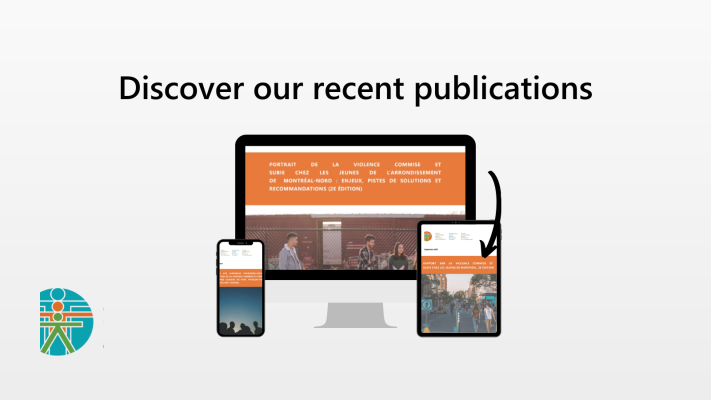
The ICPC recently published several reports tackling violence committed and suffered by the youth of Montreal. Specifically, three reports are now available:

1) Problem-Services Arrangement Analysis Report on the Prevention of Violence Committed and Suffered by Young Users of François-Perrault Park in the Saint-Michel Neighbourhood

The Villeray–Saint-Michel–Parc-Extension borough of Montreal mandated the ICPC to analyze the identified causes and existing protective factors around violence committed and suffered by the young users of the François-Perrault park. The objective of this report is to present and analyze issues relating to this type of violence and how to prevent it.

2) Report on Violence Committed and Suffered by the Youth of Montreal

This ICPC report, mandated by the city of Montreal as part of the Urban Safety Laboratory’s activities, presents an overview of urban safety with respect to violence committed and suffered by youth throughout the island of Montreal.

3) Report on Violence Committed and Suffered by Youth in the Montreal-North Borrough

The Montreal-North borough mandated the ICPC and a team of sociology experts, Mariam Hassaoui from Université TÉLUQ and Victor Armony from UQAM, to do an urban safety audit of violence committed and suffered by youth of 12 to 25 years of age in Montreal-North including a detailed portrait (ADS+ and place-based approach) of the environment (physical, socio-economic, and social-health) in which they evolve, of the crime and violence committed and suffered by this youth, and of the available resources in the area.

See a full list of the thematic reports published by the ICPC

These reports are only available in French.

The ICPC takes part in a forum on violence prevention in youth

On December 7th, the ICPC took part in the first day of the forum Montréal sécuritaire pour les jeunes : dialogue sur l’intervention en prévention de la violence (Montreal Safe for Youth: Dialogue on violence prevention and intervention) to present an overview of the chapters and highlights of the “Rapport sur la violence commise et subie chez les jeunes de Montréal” (Report on Violence Committed and Suffered by the Youth of Montreal), a recent publication by the ICPC. This meeting of community and institutional partners involved in prevention aimed to:

  • Create a common understanding of the violence phenomenon;
  • Discuss youth resilience in a context in which the feeling of safety is important;
  • Take stock of the most recent data on risk factors of violence in Montreal;
  • Highlight the best prevention initiatives;
  • Foster collaboration and the development of an integrated vision among stake holders in violence prevention in youth;
  • Work together around specific issues in violence prevention and fuel the municipal conversation on urban safety;
  • Counter the phenomenon of committed and suffered violence.

The meeting was organized by the Montreal Service de la diversité et de l’inclusion sociale (Service for Social Diversity and Inclusion – SDIS) in collaboration with the Réseau d’échange et de soutien aux actions locales (Network for exchange and local action support – RESAL), of which the ICPC is a coordinating member, and the Institut du nouveau nonde (New World Institute – INM).

The other presentations of the forum included panelists from the Service de police de la ville de Montréal (Montreal Police Department – SPVM), L’Anonyme, and the Institut universitaire Jeunes en difficulté (At Risk Youth University Institute – IUJD) of the Centre intégré universitaire de santé et de services sociaux du Centre-Sud-de-l’Île-de-Montréal (Integrated University Center for Social Services of the South Center of the Island of Montreal – CIUSSS), ICPC partners.

The ICPC invited to an SPVM meeting in Saint-Michel

On November 30th, the ICPC had the pleasure of attending a presentation of the strategic plan for fighting gun violence and of the Équipe de concertation communautaire et de rapprochement (Team for Community Dialogue and the Development of Closer Ties – ECCR) given by the Service de police de la ville de Montréal (City of Montreal Police Department – SPVM), an ICPC partner, in collaboration with the neighbourhood station #30 of the Saint-Michel neighbourhood.

Concerning gun violence, the SPVM presented the current situation in Montreal and the main directions taken by the strategic plan for fighting gun violence. In particular, the SPVM highlighted the importance of collaborating with the community when it comes to the prevention of gun violence.

This meeting with the community was also an opportunity to meet the new ECCR that has been deployed since April 2021 in many areas of Montreal. This unit aims to connect with citizens and community organizations to find common and sustainable solutions to current or emerging issues around social cohabitation and urban safety.

The event was also an opportunity to introduce several local initiatives in which the neighbourhood station #30 is involved, in particular, those aiming to develop closer ties with the community, especially with youth.

Training session for community workers offered by the RÉSAL

As part of the development of the Réseau d’échange et de soutien aux actions locales (Network for exchange and local action support, RÉSAL)’s community of practice, of which ICPC is a member and the coordinator, a fourth training session in a series of activities planned this fall was held on November 11th. This training session mainly addressed community workers in Montreal to introduce methods of approach, of contact, and of intervention in street work for people working with youth and with people living in difficult situations.

The activity was hosted by Maxime Bonneau, clinic coordinator and trainer for PACT de rue, a community organization and RÉSAL member that works directly with youth and people in difficulty to promote a healthy lifestyle and prevent risk behaviors.

The following subjects were discussed:

  • The definition and history of street work;
  • How to do field observation;
  • How to integrate a living environment well;
  • How to master intervention methods.

More information about other training sessions offered:

Violence prevention in street gangs

Sexual violence prevention

Online hate prevention

These training sessions were carried out with the financial support of the City of Montreal.