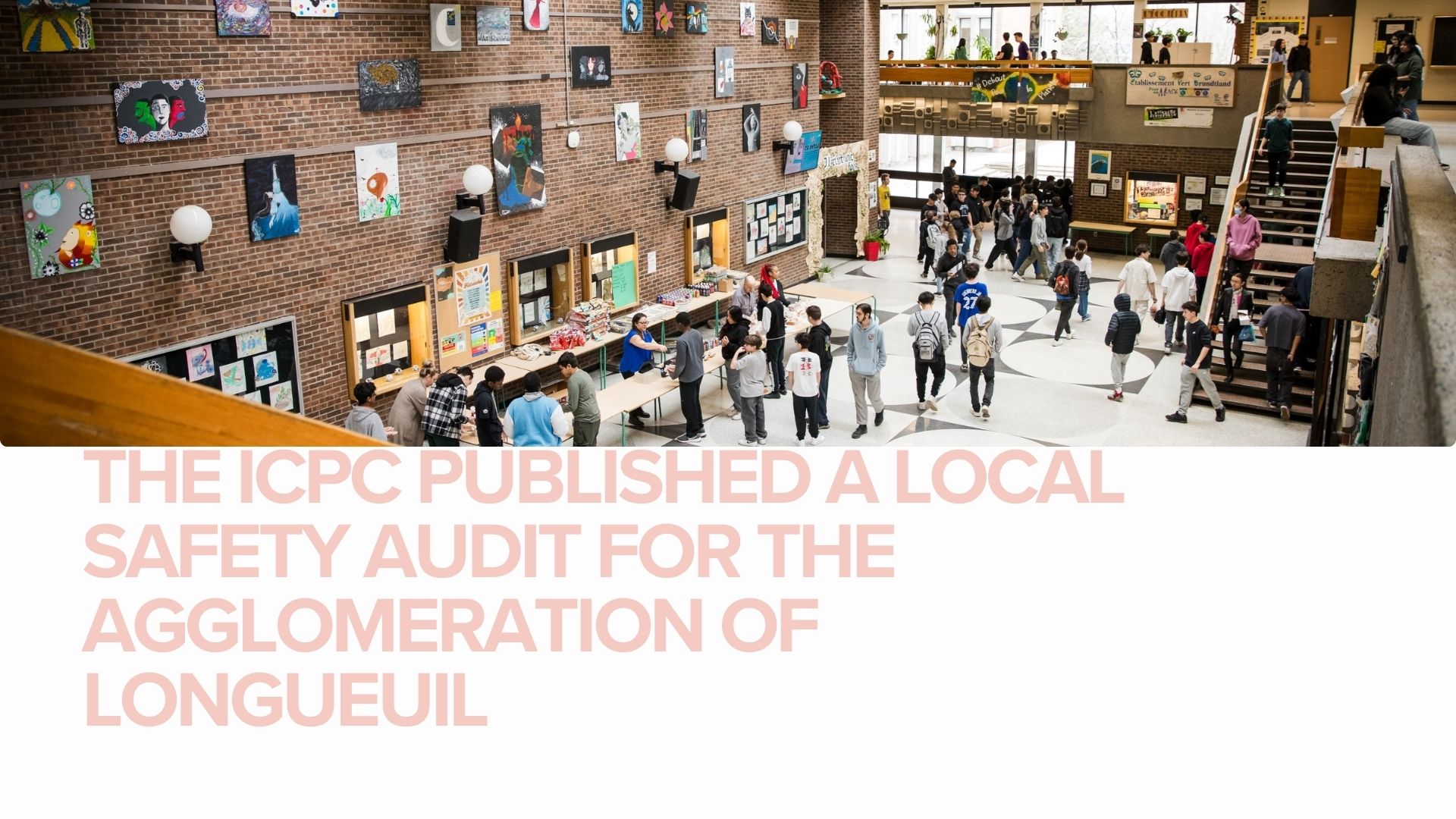
The ICPC published its local safety audit for the agglomeration of Longueuil

An increasing rate of crimes against the person was observed in the Longueuil agglomeration between 2018 and 2022. Also, over the same period, it was noted that young women were the most numerous victims of crime in private spaces, and that young people aged 12 to 17 accounted for the highest number of victims in schools. 

These examples of analyzed observations of crime in the agglomeration have encouraged the need to strengthen collaboration between the various local stakeholders, such as the police, public institutions and community organizations, to put in place coordinated and effective prevention measures. Through the Government of Canada’s Building Safer Communities Fund (BSCF), contributed in part to the Government of Quebec under an agreement, the City of Longueuil appointed the ICPC to support it in conducting a local safety audit. The purpose of this report is to provide an overview of safety among youth in the Longueuil agglomeration and to encourage community participation in safety issues.  

Achieved through a collaborative approach favouring positive and sustainable transformation as well as through space syntax approach, the report provides a quantitative analysis based on police data provided by the Urban agglomeration of Longueuil Police Service. The report also presents a qualitative analysis, which was carried out in collaboration with local stakeholders, involving consultative activities with young people in the territory. Finally, the study features concrete recommendations and solutions, appropriate and adapted to local realities, to strengthen and create safer public spaces. 

The report is divided into 4 sections:  

  • An analytical framework, which lays the foundation for the study, addressing urban safety and the space syntax. It also points out the limitations of using police data and quantitative analysis;   
  • A portrait of crime in living spaces, which provides an overview of crime in the Longueuil agglomeration, detailing alleged perpetrators and victims by crime location, relationships between victims and perpetrators, and the temporality and geography of the crimes, etc.;  
  • The results of the on-site survey, such as risk factors and the feeling of safety in public spaces in the agglomeration, exploring issues relating to social cohabitation, the school environment, family life and parenting, cyber-violence, etc.;  
  • Conclusions and possible solutions, in collaboration with youths and local stakeholders, to improve safety, strengthen human and financial resources, coordinate organizational structures, and develop protection strategies for private and public spaces, such as schools and cyberspace.
Read the report here (available in French only)

Read the press release (available in French only)

Two exclusive RÉSAL trainings, coordinated by the ICPC

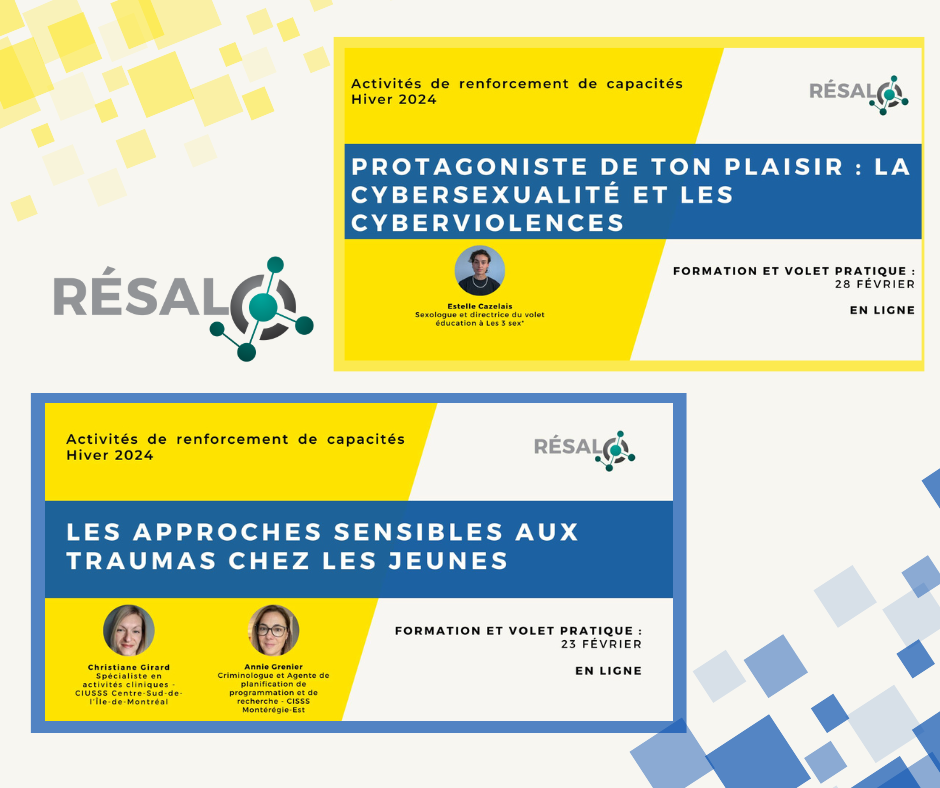
As part the capacity-building activities of the Montreal Network Réseau d’échange et de soutien aux actions locales (RÉSAL), of which the ICPC is a member and coordinator, two series of thematic training sessions were held online in winter 2024. One session focused on trauma-sensitive approaches for youth, on 23 February, and the other on cybersexuality and cyber violence, on 28 February.   

About thirty people participated in the two activities, including front-line workers, social development officers, and representatives of community organizations as well as institutions working with youth in the Greater Montreal area. The aim of the activities, which focused on violence committed and suffered by young people aged 12 to 25, was to equip participants to deal with the various problems encountered in their day-to-day work.    

Trauma-sensitive approaches for youth, led by Annie Grenier, criminologist and programme planning and research officer at CISSS Montérégie-Est, and Christiane Girard, specialist in clinical activities with young offenders at CIUSSS Centre-Sud-de-l’Île-de-Montréal.

This first training session addressed the distinction between simple and complex trauma, highlighting the variety of traumatic events and their impact on different spheres of life, such as attachment, cognition, and emotion regulation. The training emphasized the importance of attentive listening and reception, rather than investigation, when working with young victims of trauma

Through specialized resources and the practical example of the film ReMoved, participants were encouraged to adopt a multidisciplinary and adaptive approach. Initiatives such as the LOTUS programme and the adoption of this approach in schools and at the Institut national de psychiatrie légale Philippe-Pinel, illustrated its concrete application, aimed at improving support and reducing the risk of recidivism among young people faced with trauma. 

Protagonist of your pleasure: cybersexuality and cyber violence, led by Estelle Cazelais, sexologist, and director of education at Les 3 sex*

This second training session explored the complexity of sexuality in the digital age, focusing on awareness, information, and education around these issues and highlighting their importance in young people’s sexuality.   

Participants were led to adopt feminist intervention approaches that are intersectional, non-judgemental as well as intercultural, to better understand and support young people as they explore sexuality on the internet and social media. Examples of good practices, such as the use of platforms like Twitch to reach teenagers or the development of specific projects on sexting, illustrated how professionals can intervene effectively. 

The training shed light on the challenges raised by cybersexuality, such as sextortion and early exposure to pornography, while emphasizing the need for comprehensive sex education that prepares young people to navigate this complex digital environment. By addressing the legislative aspects and social impacts of cybersexuality, the training also aimed to equip participants with the knowledge and tools to support young people in building healthy and respectful relationships in the digital age.

Thank you very much to our guest experts and all those who participated for the success of this fifth cycle of training activities, which we had the pleasure of coordinating.   

ICPC takes part in the second edition of the Colloque Urbanité et jeunes marginalisés : de la confrontation à la bienveillance

The ICPC took an active part in the second edition of the Colloque Urbanité et jeunes marginalisés : de la confrontation à la bienveillance, held on May 24, 2023 in Montréal-Nord and attended by nearly 200 people. The event, jointly organized by Café-Jeunesse Multiculturel and the University of Ottawa’s Centre for Research on Community and Educational Services, aimed to bring together social, institutional and academic players to debate and exchange views on the challenges and opportunities of caring for marginalized youth.

The day kicked off with a series of conferences addressing issues such as the “non-recourse” to rights and services, the representation of deviance and delinquency among girls, as well as armed violence and political perspectives among young people. The second part of the event focused on initiatives and solutions put in place to meet the needs of young people in difficulty. Various presentations were given, including on citizen initiative incubators, community mental health clinics and understanding the causes and forms of youth violence.

The day ended with a plenary session, where ICPC members had the opportunity to network with other participants. The meeting established valuable links with other organizations and strengthened collaborations to better care for marginalized youth and promote their well-being within the community.

ICPC participation in an IBCR youth evening

ICPC is proud to have participated in the event “Mieux prévenir l’exploitation sexuelle: Parole aux Jeunes!”, organized by the International Bureau for Children’s Rights (IBCR) on May 11 at the Centre PHI in Montreal.

The event gave a voice to young people and discussed the important issue of sexual exploitation of young people, particularly in the context of the current pandemic.

The event represented the culmination of two years of hard work by five groups of young teens from the Greater Montreal area who had participated in the “Parole aux jeunes!” project. Over 70 teenagers (aged 14 to 17) took a close look at the complex issue of sexual exploitation of young people, particularly in the context of the current pandemic. The teens shared their perspectives, exchanged ideas, and reacted to recent prevention campaigns in the province, in order to better understand the problem and make recommendations to combat this scourge.

Some recommendations suggested by the teens:

  • Partnership with a well-known Instagrammer or celebrity to raise awareness and make the subject less taboo
  • Training for parents
  • Explain to young people how to recognize toxic signs.

In conclusion, the ICPC is proud to have taken part in the event “Preventing sexual exploitation: Young People Speak Out” organized by the IBCR, and is committed to an ongoing exploration of mutual collaboration on similar themes, with a common concern for prevention.

3rd RÉSAL colloquium: Nearly 100 participants discussed the prevention of cyber-violence

On Wednesday, February 15, about a hundred people participated of the Réseau d’échange et de soutien aux actions locales  (RÉSAL), of which the ICPC is a coordinating member. The colloquium, which took place at the Centre St-Pierre, in Montreal, focused on the prevention of cyber-violence. The day was filled with engaging meetings, discussions, workshops and “braindates”.

The event began with opening remarks from Roselyne Mavungu, Director General of the Centre for the Prevention of Radicalization Leading to Violence (CPRLV), who highlighted the critical need for organizations and institutions to collaborate and work together in preventing cyber-violence, particularly among young people. Pier Alexandre Lemaire, Urban Safety Advisor for the City of Montreal’s Diversity and Social Inclusion Department, followed with an overview of RÉSAL’s past activities, emphasizing the importance of networking and the value of face-to-face interactions after three years of primarily online engagement.

Khaoula El Kahlil, Research Advisor at the CPRLV, moderated the first panel of the day, on ”Crossed views on cyber-violence”, and featured experts from various fields. Detective Sergeant, Maya Alieh, of the Montreal Police Department (SPVM) gave a presentation on key considerations to keep in mind regarding cyber investigations and how to intervene when faced with incidents of cyber violence on social networks. Stéphane Villeneuve, professor and director of the program in digital integration in the school environment at the Université du Québec à Montréal (UQAM), presented research on cyberbullying in the school environment as well as a means to better understand and prevent these situations, i.e. a training program offered to Quebec teachers. Dominique Gagné and Dave Poitras, scientific advisors from the National Institute of Public Health of Quebec (INSPQ), concluded the panel with a presentation on findings and proposed solutions to prevent cyber-violence in relationships

After the first panel, both panelists and participants were divided into different groups to delve deeper into current issues and best practices for preventing cyber-violence. These discussions were organized by the event’s partner, Braindate, allowing participants to share their experiences and insights with each other.

The afternoon was divided into four workshops: The first workshop, facilitated by Jeanne Plisson, Community Support Coordinator, and Sarah Grenier, Community Support Advisor, at the CPRLV, addressed ”online hate speech”. In this workshop, participants learned about definitions of hate speech, the different possible forms that hate can take and the prevailing motives for it to occur. They also presented different tools used to prevent and respond to hate speech incidents, primarily in schools.

The second workshop offered, led by Akim Laniel-Lanani, co-founder of the Clinique de cyber-criminologie  at the School of Criminology at the Université de Montréal (UdeM), focused on “cyber-hygiene”. Akim presented an overview of the use of social networks by youth before discussing useful tools and resources available to promote healthy online habits.

UdeM criminology professor Isabelle Ouellet-Morin led a third workshop that  provided participants with an opportunity to learn more about the research that led to the creation of the +Fort” mobile application. This app, a collaboration of several Quebec researchers created by the Axel Centre, aims to help youth and school professionals combat and overcome harassment and cyberstalking.

The fourth workshop of the day, “Getting Connected to Equality”, was led by Léna Gauthier-Paquette, support officer for the sexuality education program of L’Anonyme. The workshop focused on a project that aims to equip youth aged 12 to 25 to develop egalitarian, safe and consensual relationships by initiating a reflection on the sharing of real and virtual public space between genders. This activity allowed participants to understand the manifestations of stereotypes, power dynamics and sexism online through an overview based on the organization’s research. The day concluded with exchanges between participants and closing remarks from the CPRLV.

The proceedings are available in French and English.

Police-population seminar organized in collaboration with Espoir 18 in Paris

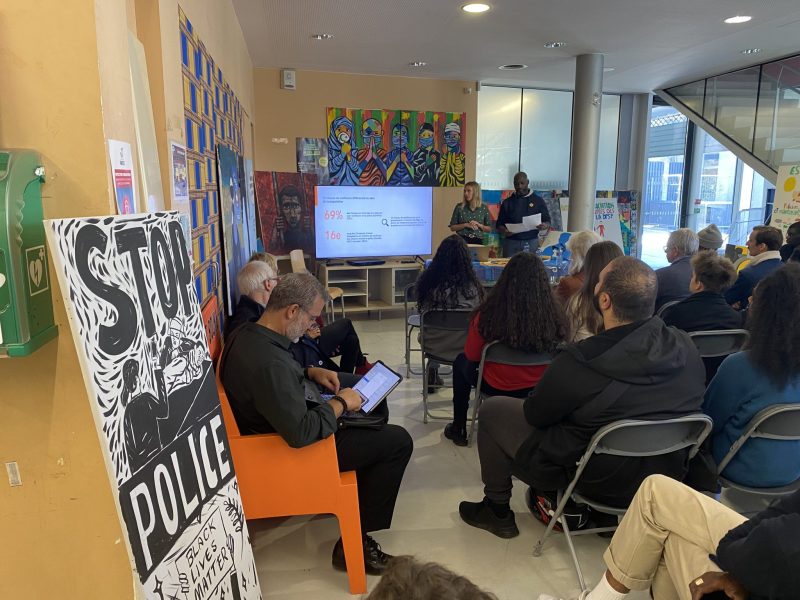
On October 11th and 12th, a seminar on improving communication between police and the public took place in Paris. The event was organized through a partnership between ICPC and the Parisian organization Espoir 18.  The objective of this seminar was to present successful initiatives undertaken internationally on constructive dialogue between law enforcement and community members, through round tables, an audience of academics, police officers, and civil society stakeholders.

Since 2019, ICPC and Espoir 18 have been collaborating on a project on improving police-population dialogue, with a particular emphasis on the young public and minority groups in their relationship with the police institution. This partnership is therefore part of a research on ways to improve this type of dialogue, to document innovative experiences and practices at the international level and to promote knowledge transfer.  This year, several activities were carried out as part of this collaboration: a review of international good practices was co-authored, ICPC hosted the Espoir 18 team in Montreal as part of its North American theatre tour, and this seminar which took place in October.

The seminar included :

  • The presentation of the practice review “Improving Police-Population Dialogue: An Introduction to International Issues and Practices” produced by ICPC and Espoir 18, with the support of the Open Society Foundations;    
  • The presentation of successful national (in France) and international initiatives along with round table discussions; 
  • The screening and debate of a documentary made by the young of Espoir 18 on racial profiling; 
  • Stories of young people, families, and police officers on the relationship between the police and the population; 
  • An evening debate on possible solutions to improve the police-population dialogue and a future action plan to be put in place.  

The development of an action plan for the period 2023 to 2025 based on the exchanges and lessons learned from the seminar will be produced for the next phase of this collaboration.

Chronicle of the ICPC on France 24

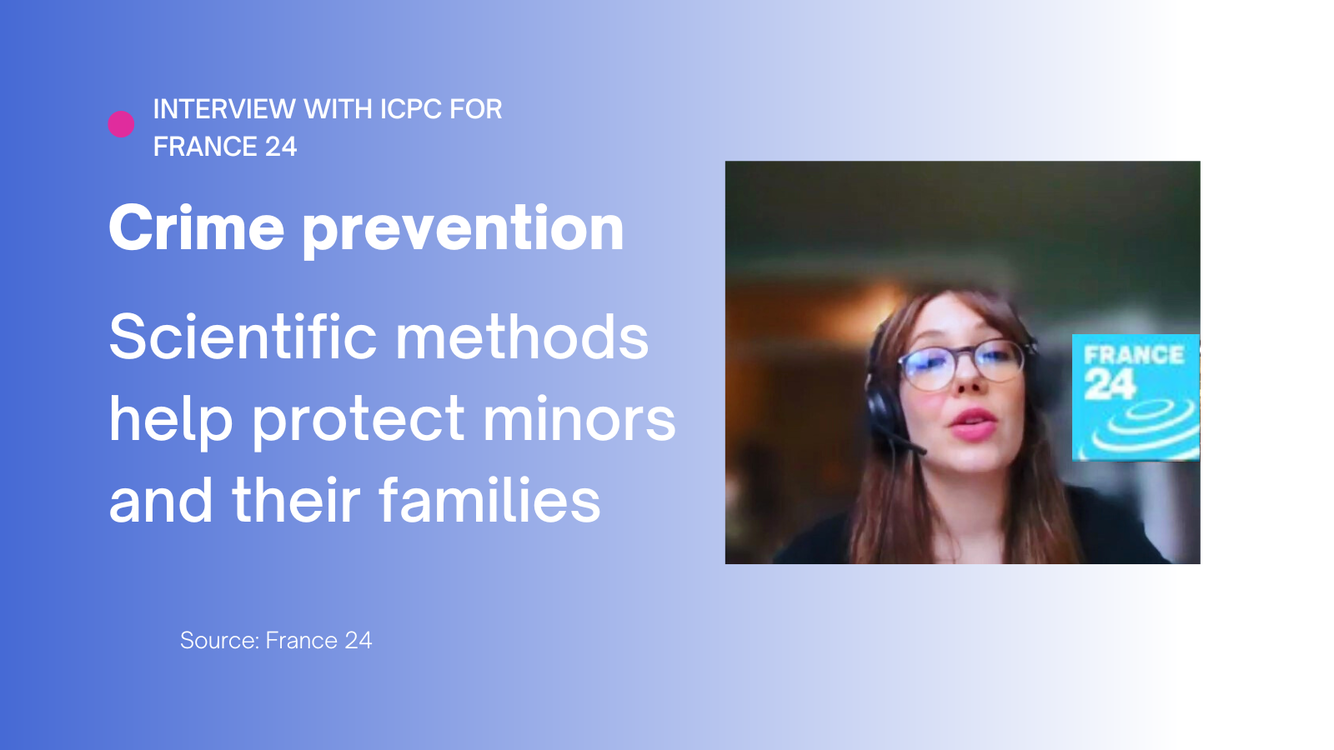
The ICPC was invited to participate in a science segment on the France 24 channel which focused on the knowledge of Canadian ways to detect and prevent the risks of delinquency among young children.

In this interview, Anne Vandelle, analyst and coordinator of activities and projects at ICPC, focuses on the work that can be done around a set of protective factors in young children. These can have a positive impact on children, specifically on their safety and sense of security. Through a few examples of programs, we highlight the importance of offsetting risk factors with protective factors, such as physical and mental health, and the feeling of of safety, in order to prevent the risk of delinquency from childhood.    

To watch the interview “Crime prevention: Scientific methods help protect minors and their families”:  https://bit.ly/3h9Gy5f 


A Youth Strategy Action Plan developed by VSP

The borough of Villeray-Saint-Michel-Parc-Extension (VSP) mandated the ICPC to develop an analysis of the causes identified and the existing protective factors surrounding the violence committed and suffered by young users of François-Perrault Park in Montreal. It is on the basis of the causes identified and the recommendations of the ICPC experts in violence prevention that the Borough developed its Youth Crime Prevention Strategy.   

In addition, VSP has granted hundreds of thousands of dollars to fund numerous projects by partner organizations that support young people aged 12 to 25 on its territory. All of the projects suggested by VSP are directly linked to the strategy, particularly in terms of the following objectives:  

  • To further promote social inclusion and participation of young people  
  • Promote positive role models and pathways to success  
  • Equip young people to manage their emotions and develop social and interpersonal skills
  • Strengthen parenting skills and competencies  

For more information, download the Action Plan here (available in French).

RÉSAL community of practice activities

The ICPC remains actively involved in the process of developing a community of practice with the Réseau d’échange et de soutien aux actions locales (Network for exchange and local action support, RÉSAL) on the prevention of violence committed and suffered by youth aged 12 to 25 in Montreal. To follow up on the training sessions offered in the fall of 2021, a series of six clinical activities were organized in November and December to continue the conversation started between community workers in prevention.

These clinical supervision activities aimed to promote cooperation and horizontal knowledge transfer allowing organizations with important practice needs to find support and adapted methodological guidance. The activities were organized around the following themes:

  • Violence prevention in street gangs | November 25th and December 2nd, 2021
  • Sexual violence prevention | November 26th and December 14th, 2021
  • Street work and youth intervention | November 25th and December 9th, 2021

These sessions created a safe space to exchange on ethical dilemmas and/or professional isolation. The significance of these clinical activities was extensively appreciated by the participants. First, they offered a reflective dimension that furthered their practice allowing them to question their reflexes and to share their worries and their difficulties. Second, these activities created knowledge and recognition connections between workers from different backgrounds and areas of work, an aspect essential to the improvement of common work and to the better mutual understanding of each other’s challenges.

Overall, these training sessions and clinical activities of the RÉSAL’s community of practice reached 95 participants mostly from community organizations in and around Montreal.

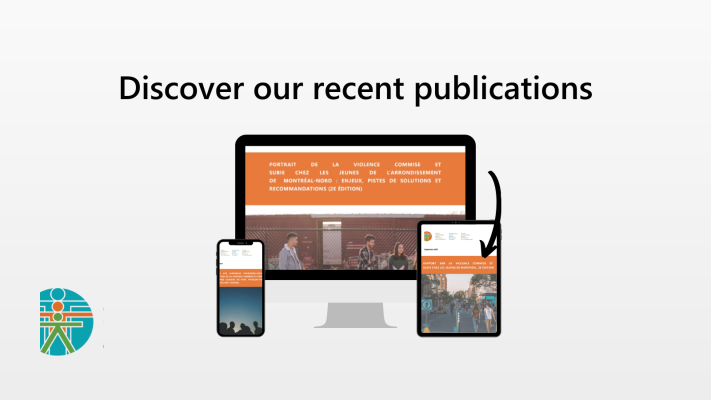
New ICPC publications

The ICPC recently published several reports tackling violence committed and suffered by the youth of Montreal. Specifically, three reports are now available:

1) Problem-Services Arrangement Analysis Report on the Prevention of Violence Committed and Suffered by Young Users of François-Perrault Park in the Saint-Michel Neighbourhood

The Villeray–Saint-Michel–Parc-Extension borough of Montreal mandated the ICPC to analyze the identified causes and existing protective factors around violence committed and suffered by the young users of the François-Perrault park. The objective of this report is to present and analyze issues relating to this type of violence and how to prevent it.

2) Report on Violence Committed and Suffered by the Youth of Montreal

This ICPC report, mandated by the city of Montreal as part of the Urban Safety Laboratory’s activities, presents an overview of urban safety with respect to violence committed and suffered by youth throughout the island of Montreal.

3) Report on Violence Committed and Suffered by Youth in the Montreal-North Borrough

The Montreal-North borough mandated the ICPC and a team of sociology experts, Mariam Hassaoui from Université TÉLUQ and Victor Armony from UQAM, to do an urban safety audit of violence committed and suffered by youth of 12 to 25 years of age in Montreal-North including a detailed portrait (ADS+ and place-based approach) of the environment (physical, socio-economic, and social-health) in which they evolve, of the crime and violence committed and suffered by this youth, and of the available resources in the area.

See a full list of the thematic reports published by the ICPC

These reports are only available in French.