Advancing local action in crime prevention

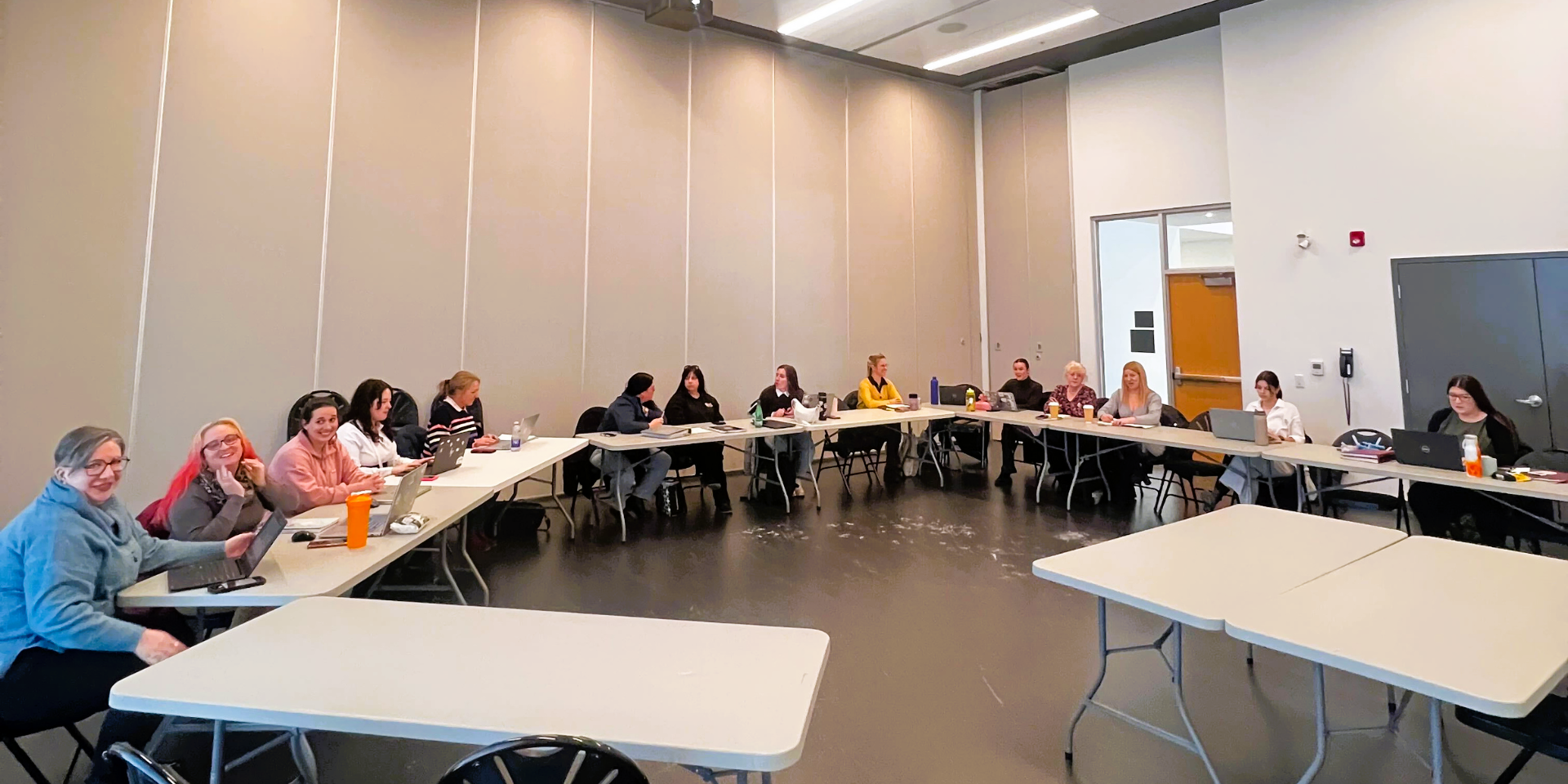
On January 28, 2026, in Lévis (Quebec, Canada), the ICPC took part in a meeting of the Community of Practice of the Fonds bâtir des communautés sécuritaires (FBCS), a public funding program in Quebec that supports local crime prevention initiatives. The meeting aligned with the city’s Territorial Urban Safety Action Plan, ensuring coherence between technical exchanges and locally established priorities. 

What we accomplished on the ground 

We met with institutional, community, school, and municipal stakeholders in the City of Lévis to review progress on FBCS‑related actions, clarify roles and responsibilities, and align interventions with the Territorial Urban Safety Action Plan. We also continued our evaluation mandate for an FBCS‑supported program, ensuring the next steps remain consistent with local priorities. 

What this means for prevention 

This participation helped apply data‑informed practices and improve day‑to‑day coordination among local stakeholders—two conditions that support sustained crime‑prevention outcomes. This work aligns with the ICPC’s mission to strengthen local capacities and inform decision‑making with context‑specific tools. The discussions highlighted as well that FBCS‑supported initiatives gain traction when grounded in collaboration and anchored in daily living settings.

We are grateful to our partners in Lévis for welcoming Solal Holtz and Marie‑Pier Allard‑Caron during this visit. 

ICPC Launches Pan-Canadian Study on Public Transit Safety

The International Centre for the Prevention of Crime (ICPC) has launched a large-scale study to analyze public transit safety issues across Canada. The initiative will focus on five major cities: Montreal, Toronto, Ottawa, Calgary, and Edmonton. Its objective is to examine the safety challenges faced by both users and transit staff—factors that directly impact passenger well-being, ridership levels, employee retention, and the reputation of transit agencies. Certain groups, including women, persons with disabilities, and marginalized communities, are especially vulnerable to various forms of violence and insecurity.

A Field-Based Approach to Tailored Solutions

The study will be carried out using a range of methods:

  • Document review: analysis of existing literature and municipal policies
  • Key informant interviews: with stakeholders in transit and public safety
  • Exploratory walks: observation and on-site discussions with transit users representing diverse backgrounds

Each city will be the subject of a summary report, with a final publication compiling best practices and proposed solutions from across the country.

A Societal Challenge: Safe Mobility for All

By examining the entire journey of transit users—including vehicles, stations, waiting areas, and adjacent public spaces—this study aims to identify tangible solutions to improve everyone’s sense of safety.

An Action-Oriented Initiative

The study’s findings will support municipalities, transit agencies, and community organizations in developing preventive measures tailored to local realities.

With this initiative, the ICPC reaffirms its commitment to safer, more inclusive cities—where everyone can move around with confidence.

This study is made possible with financial support from the Government of Canada.

Reinforcing security in Canada: a strategic meeting between the ICPC and the Government of Canada

On May 30, our Director General, Ann Champoux, had the honor of meeting with the Honourable Dominic LeBlanc, Minister of Public Safety Canada, Democratic Institutions and Intergovernmental Affairs, and Shawn Tupper, Deputy Minister of Public Safety Canada. This meeting provided an opportunity to discuss the ICPC’s mission, current crime issues, and prevention needs in Canada.  

In line with the ICPC’s commitment to promoting collaborative action, the meeting emphasized the importance of collaboration between the institutional, community, associative and private sectors in facing the problems of crime and insecurity in Canada.   

Shawn Tupper and the Honourable Dominic LeBlanc (Minister of Public Safety Canada), Ann Champoux (ICPC)

This occasion represented an important step in strengthening partnerships between the ICPC and the Canadian authorities to create safer environments for all. It also stresses the organization’s ongoing commitment to working with public institutions to develop crime prevention strategies that meet the specific needs of Canadian communities. 

New safety and prevention experts join the ICPC Board of Directors

We are pleased to welcome two new members, Anna Rau and Didier Deramond, and of the return of Barbara Holtmann, to the ICPC Board of Directors!  

Anna Rau, with her expertise in urban safety and crime prevention, brings us a strategic vision enriched by her role as Director of the German – European Forum on Urban Security (DEFUS). Her international experience is an undeniable asset to our mission.  

Didier Deramond, current Director General of the Quebec Association of Police Directors, is also joining our Board. His in-depth knowledge of police issues, his national and international reach, and his managerial expertise will greatly contribute to strengthening our initiatives. 

We are also delighted to welcome back Barbara Holtmann, after having been a member twelve years ago. As Director of Fixed, where she works in the fields of community development, gender equality, and community safety, her return will further our global mission.   

Once again, welcome to Anna, Didier, and Barbara!

Discover our new Media Centre on our website

We are thrilled to introduce our new Media Centre, which features all our media appearances in Quebec, Canada, and internationally.   

In this section of the website, you can have access to our press review since 2020, highlighting the work of the ICPC (publication releases, special reports, expert interviews, major projects, conferences, etc.), as well as our press releases.   

Media requests:   

The person in charge of media relations will respond to your request as soon as possible. Please send your contact details and the purpose of your request to the following address: vreggio@cipc-icpc.org (to Vanessa Reggio, Director of communications and public relations).  

Visit page

The ICPC takes part in a CMNCP conference on urban safety

On Tuesday, October 5th, the ICPC was on a panel as part of the virtual conference: “Community Safety in the Midst of a Global Pandemic: Who Are We Leaving Behind?” organized by the Canadian Municipal Network on Crime Prevention (CMNCP), an ICPC partner, that took place from October 4th to 6th, 2021, gathering nearly 80 participants.

The session in which the ICPC took part was called “Eradicating Violence: Essentials That Do Not Leave People Behind” and discussed community safety and crime prevention, as well as an evidence-based and inclusive approach to violence prevention. Questions discussed included:

  • What are the evidence-based solutions that should be more used in Canada?
  • How to implement these solutions?
  • What can we learn from cities that succeeded in making changes necessary to succeed?
  • Can we learn from cities like London, UK, that applied a public health model to violence prevention?

The ICPC would like to thank the CMNCP for the invitation.

New Guide – DataJam Against Exploitation: Participant Handbook

As part of the DataJam Against Exploitation 2021, the first online innovation competition in Canada, a “Participant Handbook” was developed and published. The event, financed by the Government of Canada, was organized in partnership between the ICPC, Fundación Pasos Libres, IBM, and the UNODC.

The handbook was adapted and translated collaboratively by the Fundación Pasos Libres, the ICPC and the UNODC from an earlier version published by Fundación Pasos Libres, with the support of IBM Corporate Social Responsibility, as part of the training materials for the DataJam Pasos Libres Online 2020, the first international contest of its kind, also on human trafficking.

The DataJam Against exploitation, held in May 2021, aimed to develop technological solutions to spot and fight human trafficking in Canada, especially the trafficking of youth, indigenous people, and members of the LGBTQI+ community. The contest also hoped to increase public awareness of human trafficking, to improve participants knowledge and resources, and to further intersectoral and interdisciplinary collaboration. The handbook contains three explanatory modules offering the reader an introduction to human trafficking in Canada and related issues, an overview of data’s importance in the fight against this crime, and case studies.

The first module, Introduction to Human Trafficking, discusses means of exploitation, risk factors, and recruitment and control methods. It also takes a brief look at different forms of legislation aimed at the prevention of human trafficking.

The second module, Human Trafficking and Data, explores the importance of data in the fight against human trafficking. It gives a few examples of key industries and compelling data as well as certain data security and protection considerations.

The last module, Case Studies / Cases of Success, is on three organizations and initiatives that used the power of data and collaboration to prevent and fight human trafficking.

Download: DataJam Against Exploitation: Participant Handbook

Winners of the DataJam Against Exploitation revealed

Friday June 4th, at the end of the DataJam Against Exploitation that brought together 75 participants of 16 different nationalities, the winning teams were announced. In first place came Buyer Resist from Vancouver who created a web app that helped track traffickers by comparing the text from escort agency adds across Canada. They will receive a monetary prize and a spot in the IBM Incubator Program to help them further develop their project. They will also be invited to participate in the DataJam Pasos Libres 2021 that will take place on a world-wide scale in the fall, and lastly, their project will be promoted by all the co-organizers of the DataJam Against Exploitation.

Team Scotiabank AMA from Toronto, 5 data scientists from Scotiabank Anti-Money Laundering Models and Analytics (AML), came in second place, and the third place went to CDL Team from Montreal and affiliated with Montreal Institute of Learning Algorithms (Mila). This event marked the official ending of the competition.

Upcoming Events – May

The DataJam Against Exploitation, an online event being held May 7-17, 2021, aims to increase public awareness of human trafficking, enhance the technical and physical capacity of participants, and strengthen collaboration across interdisciplinary sectors to prevent this crime in Canada.

This competition, funded by the Government of Canada, is offered in partnership with the ICPC, the United Nations Office on Drugs and Crime (UNODC), Fundación Pasos Libres, and IBM. With the objective of developing innovative technological solutions, participating teams will have access to expert presentations, workshops, and mentoring to learn about the issue.

To this end, there will be sessions open to all, which you can attend without having to take part in the competition. As the event is taking place across Canada, please note that the official languages of communication for these sessions are French and English.

Here is the agenda of the sessions open to the public:

Saturday, May 8, 2021, 10:30-11:15 a.m. (EST) – Session in French and English

OPENING REMARKS AND WELCOMING MESSAGES

Speakers:

  • Mark Schindel, Director of Public Safety, Public Safety Canada
  • Panagiotis Papadimitriou, Team Leader, Technical Cooperation, UNODC
  • Ann Champoux, Director General, ICPC
  • Claude Guay, President and General Manager, IBM Canada
  • Sebastián Arévalo Sánchez, Co-founder, Fundación Pasos Libres

To register


Saturday, May 8, 2021, 11:15 a.m. – 12:00 p.m. (EST) – Session in English

DATAJAM PREVISOUS EXPERIENCES

The objective of this session is to provide participants with specific examples of the dynamics and outcomes of previous DataJam competitions.

Speakers:

  • Keltoum Laghjibi, Global Public Health and Informatics Student, University of Virginia
  • Laura Rodriguez Rodriguez, Student in Computer and Systems Engineering, University of the Andes, and co-founder of Aleph Mind.

To register


Saturday, May 8, 2021, 12:00-1:00 p.m. (EST) – Session in English

CONFERENCE: ALBERTA’S RESPONSE TO HUMAN TRAFFICKING

The objective of this session is for participants to understand the importance of partnerships to provide high quality services to victims of human trafficking.

  • Speaker:
  • Jane Fox, Director General, REACH

To register


Saturday, May 8, 2021, 12:00-1:00 p.m. (EST) – Session in French

CONFERENCE: VICTIMS OF SEX TRAFFICKING IN THE AMERICAS

This session aims to provide participants with a better understanding of how the issue of human trafficking has been addressed by seven countries in the Americas, including Canada.

Speaker:

  • Fernando A. Chinchilla, Ph.D., Senior Analyst, ICPC

To register


Saturday, May 8, 2021, 2:00-3:00 p.m. (EST) – Session in English

CONFERENCE: HUMAN TRAFFICKING RESEARCH IN CANADA

The objective of this session is to increase participants’ awareness of the challenges of data collection on human trafficking.

Speaker:

  • Kathy AuCoin, Chief, Analysis Program, Canadian Centre for Justice and Community Safety Statistics, Statistics Canada

To register


Saturday, May 8, 2021, 2:00-3:00 p.m. (EST) – Session in French

CONFERENCE: HOW TO DEVELOP TOOLS THAT HELP PREVENT TRAFFICKING IN PERSONS: WHAT TO DO AND WHAT NOT TO DO?

The goal of this session is to help participants understand and appreciate the importance of measuring the effects and implications (intended and unintended) of their anti-trafficking solutions.

Speaker:

  • Josée Mensales, Co-founder and coordinator of the Survivors Program, Service de police de la Ville de Montréal (SPVM)

To register


Saturday, May 8, 2021, 3:00-4:30 p.m. (EST) – Session in French and English

PANEL – TRAFFICKING AND VULNERABLE COMMUNITIES: HUMAN AND TECHNOLOGICAL CHALLENGES

This panel invites participants to better understand why certain communities are more vulnerable to human trafficking and what are the technological and human challenges to curb the phenomenon. Two survivors will also contribute to the discussion.

Speakers:

  • Nathalie Khlat, Co-founder and Director of Projects, Le Phare des AffranchiEs
  • Diane Redsky, Executive Director, Ma Mawi Wi Chi Itata

To register


Saturday, May 9, 2021, 1:00-2:00 p.m. (EST) – Session in English

CASE STUDY: HUMAN TRAFFICKING AND DATA ANALYSIS

At the end of this session, participants will know how the first ever global data hub to facilitate the sharing of information about human trafficking across industries works.

Speaker:

  • Neil Giles, Director, Traffik Analysis Hub

To register


Saturday, May 9, 2021, 1:00-2:00 p.m. (EST) – Session in English

CASE STUDY: PROJECT SHADOW

At the end of this session, participants will have an overview of Project Shadow and some of the most advanced analytic capabilities to combat human trafficking.

Speakers:

  • Joseph Mari, Director, Financial Intelligence Unit and External Partners, Scotiabank
  • Vishal Gossain, Vice President, AML/ATF Analytics

To register

Upcoming webinar on risks and trends in online child exploitation

UPCOMING WEBINAR-DISCUSSION
Cybertip.ca: Risks and trends in online child exploitation

Date: April 29, 2021
Time: 1:00 pm to 2:00 pm (EST)
Online registration

As part of the DataJam Against Exploitation, a competition being held from May 7 to May 17, 2021, to develop technological solutions to combat human trafficking in Canada, the International Centre for the Prevention of Crime, in partnership with the United Nations Office on Drugs and Crime, Fundación Pasos Libres and IBM Corporate Social Responsibility, is pleased to invite you to its upcoming webinar "Cybertip.ca: Risks and trends in online child exploitation" on Thursday, April 29.

We are excited to host René Morin, francophone spokesperson for the Canadian Centre for Child Protection for this discussion.

There will also be an interactive chat at the end of the discussion to learn more about the DataJam Against Exploitation competition being held this spring (https://www.ibm.org/data-jam) and to answer your questions.

Please note that the webinar will be held in French.

Online registration