The ICPC Participates in a Roundtable on Local Prevention in Latin America

On August 14, 2025, the ICPC took part in a virtual roundtable organized by the Hemispheric Network for the Prevention of Violence and Crime, in collaboration with several regional partners. The event brought together experts from Argentina, Bolivia, Mexico, Guatemala, Chile, and Canada, and was addressed to Bolivian professionals and students specializing in crime prevention. 

Oscar Figueroa, Strategic Consultant for Latin America at the ICPC, presented experiences and reflections drawn from our work on social and situational prevention. 

He also warned that organized crime represents a major threat in the region, recruiting minors and young adults for drug microtrafficking, extortion, and logistical operations. He emphasized the need to establish specific protection protocols and to strengthen coordination with justice systems and child protection services. 

Finally, he underlined the importance of enhancing interinstitutional coordination among municipalities, police, prosecutors, and community actors. He stressed that countries in the region can implement effective prevention policies by relying on minimum standards, stable funding, and regularly evaluated pilot projects. 

The roundtable was organized by ProgettoMondo, the Universidad Autónoma Metropolitana (UAM), the Gino Germani Research Institute (UBA), IECRIMT, and the Secretariat for Science and Technology. It forms part of the ongoing collaboration between the ICPC and its Latin American partners, marked by three joint activities in 2024. 

Click here to see the video recording. 

[News Release] ICPC announces a strategic collaboration for its pan-Canadian study on public transit safety

The International Centre for the Prevention of Crime (ICPC) has reached a major milestone in its ambitious pan-Canadian study on public transit safety: leading experts in transportation, urban planning, and sustainable mobility are joining the project to strengthen its scientific and operational scope.

This multidisciplinary collaboration includes partners from UQAM, Concordia University, University of Toronto, INRS-UCS, CUTA, and Leading Mobility. Together, they bring complementary expertise to address pressing safety issues affecting transit users and workers, with a focus on vulnerable populations.The study covers Montréal, Toronto, Ottawa, Calgary, and Edmonton and combines literature reviews, stakeholder interviews, and exploratory walks with diverse user groups.

Findings will feed into local and national recommendations to enhance safety, strengthen public confidence, and support inclusive urban mobility.

Read the full release

Webinar on the FIXED Methodology: Strengthening Urban Safety Through Collaboration

On June 18, 2025, the International Centre for the Prevention of Crime (ICPC) hosted a webinar as part of the Fonds pour bâtir des communautés plus sécuritaires (FBCS) to present the FIXED methodology—a structured tool designed to improve local coordination on urban safety issues. 

An Committed Audience From Key Sectors 

The webinar brought together representatives from municipalities with over 100,000 residents and public health professionals from across Quebec. The goal: provide practical tools to implement collaborative and sustainable safety initiatives tailored to local realities. 

A Structured Approach for Concrete Results

During the session, participants were introduced to the core principles and main steps of the FIXED methodology: 

  • developing a shared diagnosis, 
  • mobilizing key stakeholders, 
  • co-creating a common vision, 
  • and designing concrete action plans. 

This approach emphasizes local engagement and the implementation of effective, context-sensitive solutions. 

Three Real-World Examples 

The presentation was supported by three projects carried out with ICPC’s support: 

  • an urban revitalization initiative in Saint-Léonard, 
  • a coordinated intervention in a Montreal school, 
  • and the development of a sectoral safety plan in Gatineau. 

These case studies demonstrate the method’s flexibility and its adaptability to various contexts. 

Insightful Exchanges 

Participants highlighted the strengths of the FIXED method—its clarity, structure, and collaborative approach—while also addressing implementation challenges, such as the need for local adaptation. 

A key message emerged: lasting results require both intersectoral collaboration and a deep understanding of local dynamics. 

A Tool for Safer Communities 

This webinar confirmed the relevance of the FIXED methodology as a practical lever for building safer, more inclusive, and more resilient communities. The ICPC thanks all participants for their insights and commitment to advancing urban safety in Quebec and beyond. 

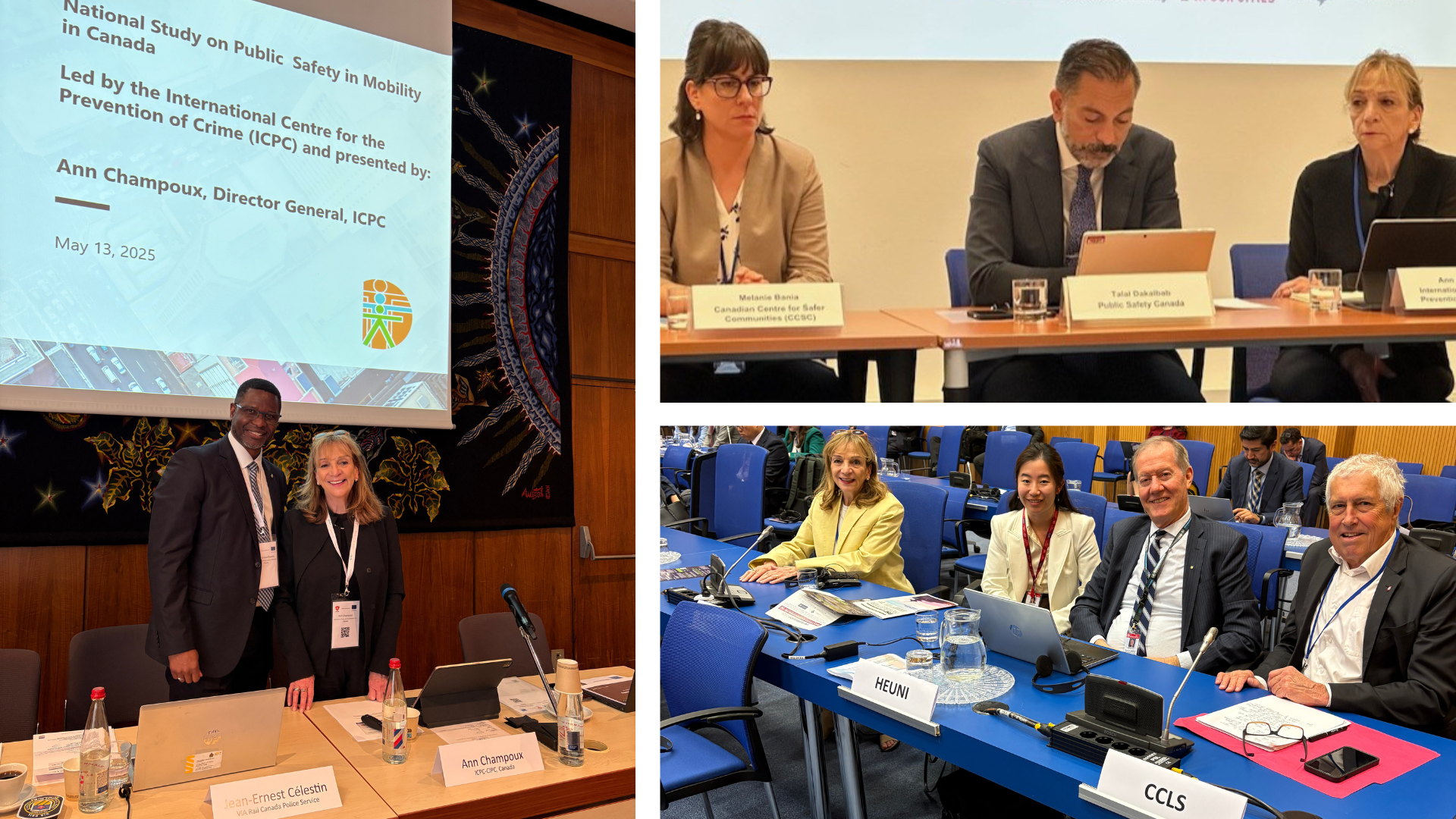
Ann Champoux on a European Mission – A Full Week Representing the ICPC Internationally between Paris and Vienna

Photo caption :

Left: Jean-Ernest Célestin (VIA Rail) and Ann Champoux (CIPC)
Right, top: Melanie Bania (CCSC), Talal Dakalbab (SPC), Ann Champoux
Bottom right: Ann Champoux at PNI

From May 13 to 21, 2025, Ann Champoux, Executive Director of the International Centre for the Prevention of Crime (ICPC), led a strategic European mission. Between conferences, meetings and event facilitation, this trip highlighted recent ICPC projects and strengthened key international partnerships. 

Paris | May 13–14

Presentation of a New ICPC Study on Public Transit Safety 

At the IMPRESS conference hosted by the International Union of Railways (UIC), Ann Champoux presented a brand-new ICPC study focusing on safety in Canadian public transit systems. This study, covering five major cities, aims to better understand the challenges faced by transit users and workers. 

Read more about the study here 

Paris | May 16

ICPC Annual General Meeting and Strategic Planning Session 

Ann Champoux chaired the ICPC’s hybrid-format Annual General Meeting. The event offered an opportunity to review past activities and reflect on future directions. 

A strategic planning workshop followed, focused on developing the 2026–2029 strategic plan. The goal: to address emerging urban safety challenges and strengthen ICPC’s impact. 

Vienna | May 20 

PNI Network Meeting and Collaboration with UNODC 

In Vienna, Ann Champoux participated in the United Nations Programme Network of Institutes (PNI) meeting. She presented ICPC’s recent accomplishments and contributed to discussions on the upcoming priorities of the Commission on Crime Prevention and Criminal Justice (CCPCJ).

Vienna | May 21

Side Event on Local Urban Safety Planning 

To conclude the mission, Ann Champoux hosted a conference organized by ICPC as part of the UNODC joint sessions. Titled Advancing Urban Crime and Violence Protection through Local Safety Planning, the session gathered 48 in-person and virtual participants. 

Speakers included: 

  • Ann Champoux (ICPC), Host 
  • Talal Dakalbab (Public Safety Canada), Moderator 
  • Aimée Comrie (UNODC), Speaker 
  • Melanie Bania (Canadian Centre for Safer Communities), Speaker 
  • Óscar Escobar (former mayor of Palmira, Colombia), Speaker 

Together, they shared real-life examples of how tailored local planning can enhance safety and quality of life in communities. 

A Mission Rooted in Action 

This European mission reaffirms ICPC’s commitment to advancing crime prevention at all levels. Through applied projects, international exchanges, and strategies grounded in local realities, the Centre continues its work to build safer, more inclusive, and resilient communities. 

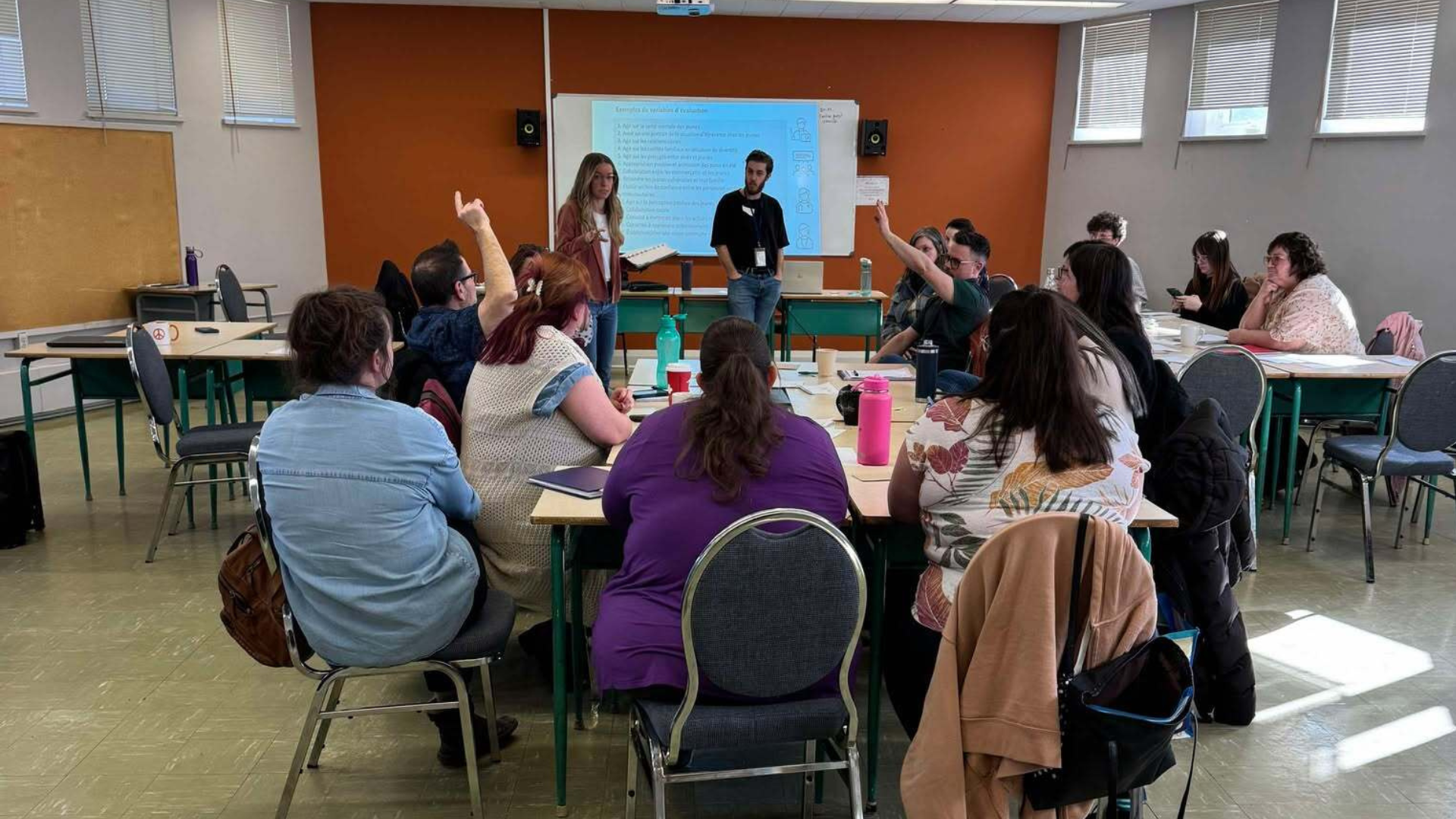
Training on Migratory Trauma and Youth Mental Health: A RÉSAL Initiative Coordinated by the ICPC 

Funded by the City of Montreal’s Prévention Montréal program, this training session which was held twice (on May 28 and June 19 2025), was attended by almost forty people,  focused on the influence of migratory trauma on the mental health of youth. It was led by Garine Papazian-Zohrabian, Professor in the Département de psychopédagogie et d’andragogie at the Université de Montréal and Scientific Director of the interdisciplinary research team on refugee and asylum-seeking families, Équipe de recherche interdisciplinaire sur les familles réfugiées et demandeuses d’asile (FRQSC). 

The training enabled participants to gain a better understanding of: 

  • The distinction between migration status and life journey; 
  • The impact of violence experienced before and after migration, as well as administrative barriers; 
  • Conditions that foster resilient support (psychosocial support, safe environments, the role of mentors). 

The discussions highlighted the urgent need for an integrated approach that combines psychosocial support, an appropriate legal framework, and actions promoting inclusion. 

The ICPC extends its sincere thanks to Garine Papazian-Zohrabian and all participants for the depth of their contributions and reflections. 

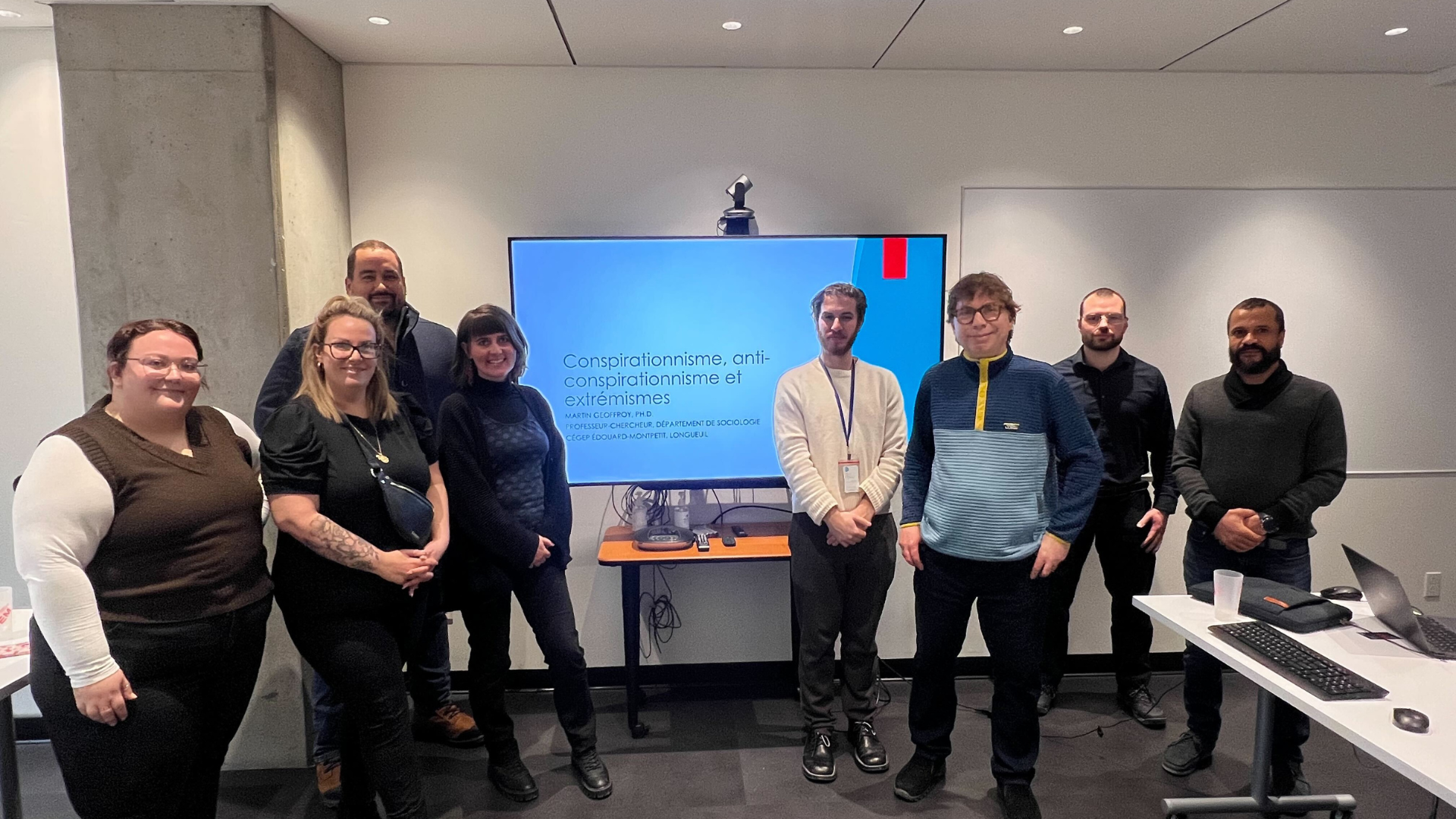
RÉSAL Offers a Powerful Training on Conspiracy Theories and the Far Right, coordinated by the ICPC

As part of the development of the capacity-building activities of the Réseau montréalais d’échange et de soutien aux initiatives locales (RÉSAL) for the winter of 2025, the ICPC, as a coordinating member, organised an in-person training session on April 11. 

Funded by the City of Montreal’s Prévention Montréal programme, the event focused on ‘Complotism, anti-complotism and the far right’, and was led by Martin Geoffroy, professor and researcher in sociology at Cégep Édouard-Montpetit and founder of the Centre d’expertise et de formation sur les intégrismes religieux (CEFIR). 

Participants explored in depth a crucial societal challenge: how conspiracy theories are gaining ground and how extremist movements exploit them. 

Key elements of the training included: 

✔ Decoding the mechanisms behind conspiracy theories, particularly those related to COVID-19 health measures, and their influence on public discourse.
✔ Understanding the psychosocial factors that lead people to embrace these narratives, often rooted in ideological beliefs rather than facts.
✔ Unpacking the strategies used by far-right groups to leverage conspiracy thinking in order to undermine democratic institutions.
✔ Practicing concrete techniques in an interactive workshop to engage effectively with those who hold such beliefs. 

Why did this training stand out? 

In the face of growing distrust in institutions and increasing polarization, understanding the workings of conspiracy discourse is essential for social workers, educators, and community professionals. 

We warmly thank Martin Geoffroy and all participants for their stimulating discussions and thoughtful insights! 

ICPC Launches Pan-Canadian Study on Public Transit Safety

The International Centre for the Prevention of Crime (ICPC) has launched a large-scale study to analyze public transit safety issues across Canada. The initiative will focus on five major cities: Montreal, Toronto, Ottawa, Calgary, and Edmonton. Its objective is to examine the safety challenges faced by both users and transit staff—factors that directly impact passenger well-being, ridership levels, employee retention, and the reputation of transit agencies. Certain groups, including women, persons with disabilities, and marginalized communities, are especially vulnerable to various forms of violence and insecurity.

A Field-Based Approach to Tailored Solutions

The study will be carried out using a range of methods:

  • Document review: analysis of existing literature and municipal policies
  • Key informant interviews: with stakeholders in transit and public safety
  • Exploratory walks: observation and on-site discussions with transit users representing diverse backgrounds

Each city will be the subject of a summary report, with a final publication compiling best practices and proposed solutions from across the country.

A Societal Challenge: Safe Mobility for All

By examining the entire journey of transit users—including vehicles, stations, waiting areas, and adjacent public spaces—this study aims to identify tangible solutions to improve everyone’s sense of safety.

An Action-Oriented Initiative

The study’s findings will support municipalities, transit agencies, and community organizations in developing preventive measures tailored to local realities.

With this initiative, the ICPC reaffirms its commitment to safer, more inclusive cities—where everyone can move around with confidence.

This study is made possible with financial support from the Government of Canada.

A strategic visit to Gatineau for safer communities

As part of the Fonds pour bâtir des communautés plus sécuritaires (FBCS), Alexis St-Maurice, analyst and project manager at the ICPC, travelled to Gatineau last March to explore local crime prevention strategies and strengthen cooperation with local stakeholders.

Alexis St-Maurice (ICPC) and Jean-François Grégoire (SPVG)

In particular, he took part in a patrol with the Service de police de la Ville de Gatineau (SPVG), which gave him an insight into the challenges of coexistence, working with vulnerable populations and dealing with incivilities. He also met with community organisations, including Maison d’accueil Mutchmore and Maison communautaire Daniel-Johnson (MCDJ), to discuss priority issues such as housing, homelessness and access to services. These discussions helped to identify promising practices to strengthen social cohesion.

Alexis St-Maurice (ICPC) and Rachel Larocque (MCDJ)

He also took part in an exploratory walk with a mobile outreach worker from Héberge Ados to assess vulnerable urban spaces and consider preventive measures to reduce opportunities for crime. Finally, he took part in collaborative workshops with community, municipal and health sector representatives to define possible concrete actions to be supported by the Fund.  

Alexis St-Maurice (ICPC) and the Maison d’accueil Mutchmore

We would like to thank everyone who accompanied Alexis. This immersive experience gave Alexis a deeper understanding of urban safety issues in Gatineau and a richer perspective on how to build safer communities

Alexis St-Maurice (ICPC) and Ana Christina (Héberge-ado)

These activities were made possible by funding from the Ministère de la Sécurité publique du Québec, Fonds pour bâtir des communautés plus sécuritaires.

When the social sciences take to the streets: Université Laval students sound out Lévis

From March 20 to 27, a dozen master’s students in the social sciences at Laval University took to the streets of Lévis on Quebec City’s south shore to engage with the community. Their mission? They were there as part of a major project run by the International Centre for the Prevention of Crime (ICPC) in collaboration with the City of Lévis. The project involved students taking the pulse of the city, tablet in hand 

Working in pairs, the students visited a number of strategic areas to circulate a questionnaire among the population. The objective was to achieve a broad representation of the city’s demographics, particularly the younger segment that is often underrepresented in conventional consultations. The gamble paid off: 759 people took the time to respond, including 1 in 10 under the age of 25. The initiative’s success is further underscored by the fact that 1 in 10 respondents were under the age of 25. 

These future professionals are immersed in the world of applied research. From the initial call for tenders to the analysis of the results, they are involved in every stage of the project. The next stage is the quantitative analysis of the data provided by the City, which will be carried out in small groups. In mid-April, Maxime Raulet, a ICPC analyst and project officer, will participate in evaluating the process 

This field project seamlessly integrates learning, civic engagement and tangible impact for the community, showcasing a remarkable example of collaboration between the university, the city and the ICPC. 

ICPC strengthens its presence in Latin America with two new members

ICPC is proud to announce the addition of two new members to its international network: the Consejo Ciudadano de Seguridad (CCS) of the State of Jalisco and the Secretaría de Seguridad Pública del Municipio de Querétaro, both based in Mexico. These strategic partnerships will strengthen our presence in Latin America, a region facing complex security challenges.  

Through these collaborations, ICPC will be able to expand its network of expertise in Latin America, share best practices and innovative solutions, strengthen local capacity in security prevention and management, and contribute to concrete projects for local communities.  

These partnerships mark an important step in ICPC’s international expansion and demonstrate our commitment to being a key player in promoting security worldwide