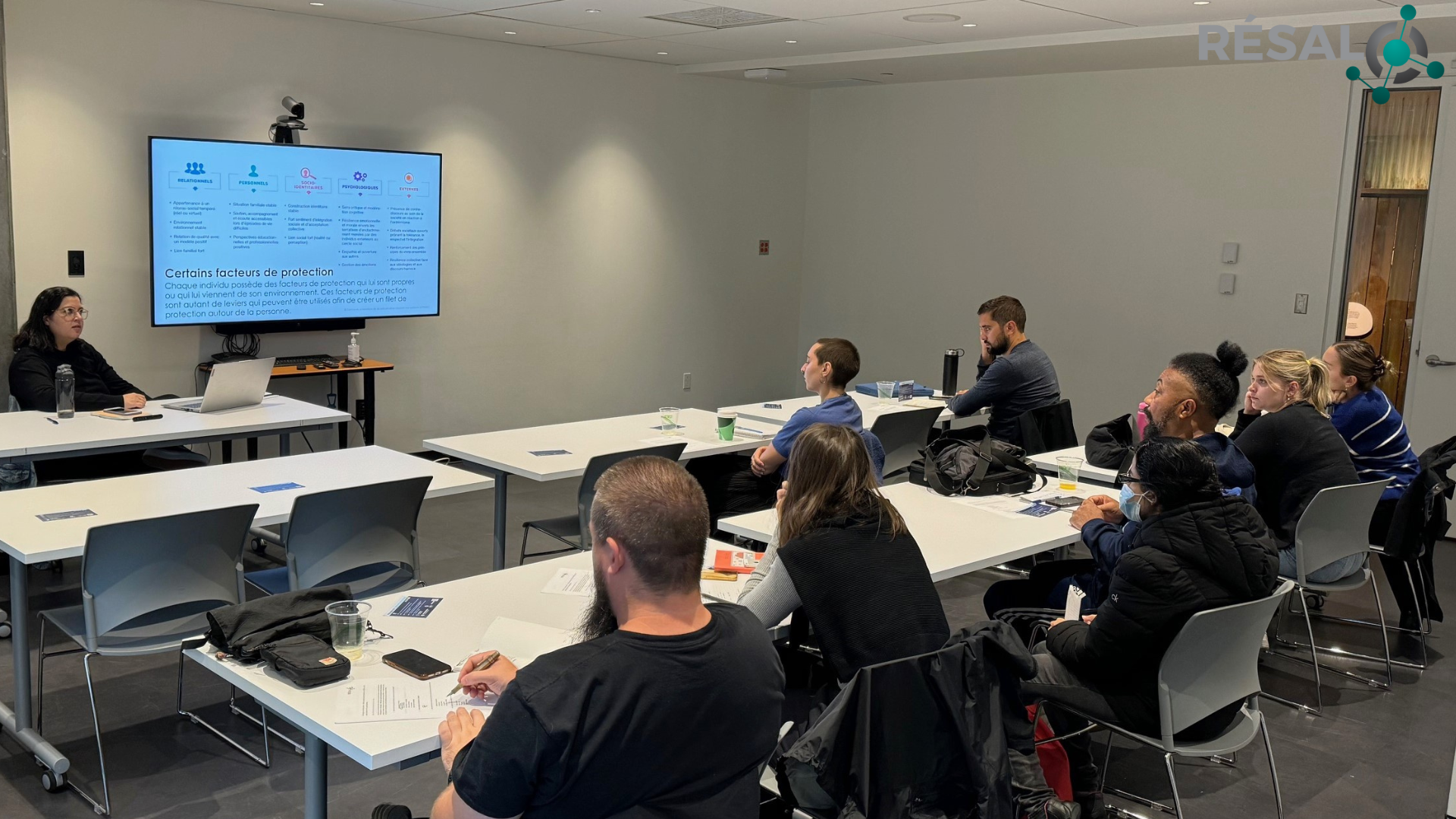
Training on Migratory Trauma and Youth Mental Health: A RÉSAL Initiative Coordinated by the ICPC 

Funded by the City of Montreal’s Prévention Montréal program, this training session which was held twice (on May 28 and June 19 2025), was attended by almost forty people,  focused on the influence of migratory trauma on the mental health of youth. It was led by Garine Papazian-Zohrabian, Professor in the Département de psychopédagogie et d’andragogie at the Université de Montréal and Scientific Director of the interdisciplinary research team on refugee and asylum-seeking families, Équipe de recherche interdisciplinaire sur les familles réfugiées et demandeuses d’asile (FRQSC). 

The training enabled participants to gain a better understanding of: 

  • The distinction between migration status and life journey; 
  • The impact of violence experienced before and after migration, as well as administrative barriers; 
  • Conditions that foster resilient support (psychosocial support, safe environments, the role of mentors). 

The discussions highlighted the urgent need for an integrated approach that combines psychosocial support, an appropriate legal framework, and actions promoting inclusion. 

The ICPC extends its sincere thanks to Garine Papazian-Zohrabian and all participants for the depth of their contributions and reflections. 
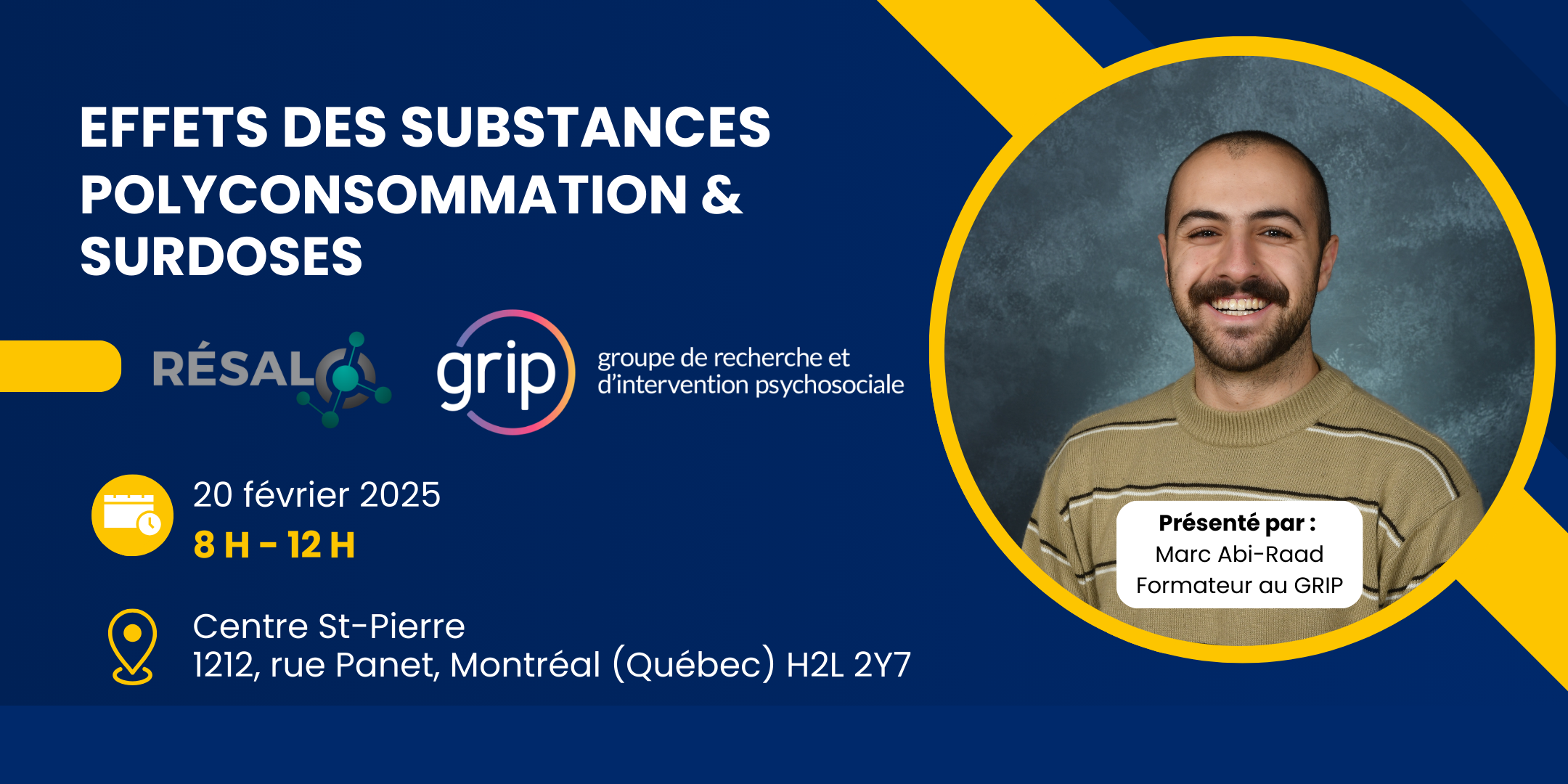
RÉSAL offers a ICPC-coordinated training session in winter 2025

As part of the development of the capacity-building activities of the Réseau montréalais d’échange et de soutien aux initiatives locales (RÉSAL) for the winter of 2025, the ICPC, as a coordinating member, organised an in-person training session on February 20th 2025. Funded by the City of Montréal’s Prévention Montréal program, the event focused on the effects of substances, poly-drug use and overdoses. 

Marc Abi-Raad, a trainer with the Groupe de Recherche et d’Intervention Psychosociale (GRIP), led the course and helped increase knowledge about psychoactive substances. 

Over the course of the day, participants learned how to rigorously classify substances according to their main and sub-categories. The training also enabled them to explore the ways in which psychoactive substances are used and to recognise the signs and symptoms of overdose specific to each category, knowledge that is essential for rapidly identifying emergency situations and intervening effectively. Thanks to this knowledge, they now have a solid basis for taking preventive action and limiting the risks associated with the simultaneous use of drugs. 

Many thanks to Marc Abi-Raad and the participants for the many exchanges that contributed to the success of the event! 

A training course offered in autumn 2024 by RÉSAL, coordinated by the ICPC

As part of the development   of capacity-building activities for  the Réseau d’échange et de soutien aux actions locales (Network for exchange and local action support, RÉSAL) for autumn 2024, of which the ICPC is a coordinator, a training session funded by the City of Montreal’s Prévention Montréal program was held on September 25, focusing on radicalization leading to violence and acts of hatred.  

Led by Anne-Sophie Bedziri-Prévost, skills development advisor at the Centre for the Prevention of Radicalization Leading to Violence (CPRLV), the course brought together field workers, social development officers and social and legal professionals who  work with youth in the Greater Montreal area.   

The training provided an opportunity to focus on the concepts that are essential to understanding the process of radicalization leading to violence, particularly among young people aged 12 to 25. It also highlighted the different dimensions of violent extremism and the protective factors to prevent and act upstream of these acts of hatred in communities.     

Thank you very much to Anne-Sophie Bedziri-Prévost and the participants for the many discussions that contributed to the success of the event!