Advancing local action in crime prevention

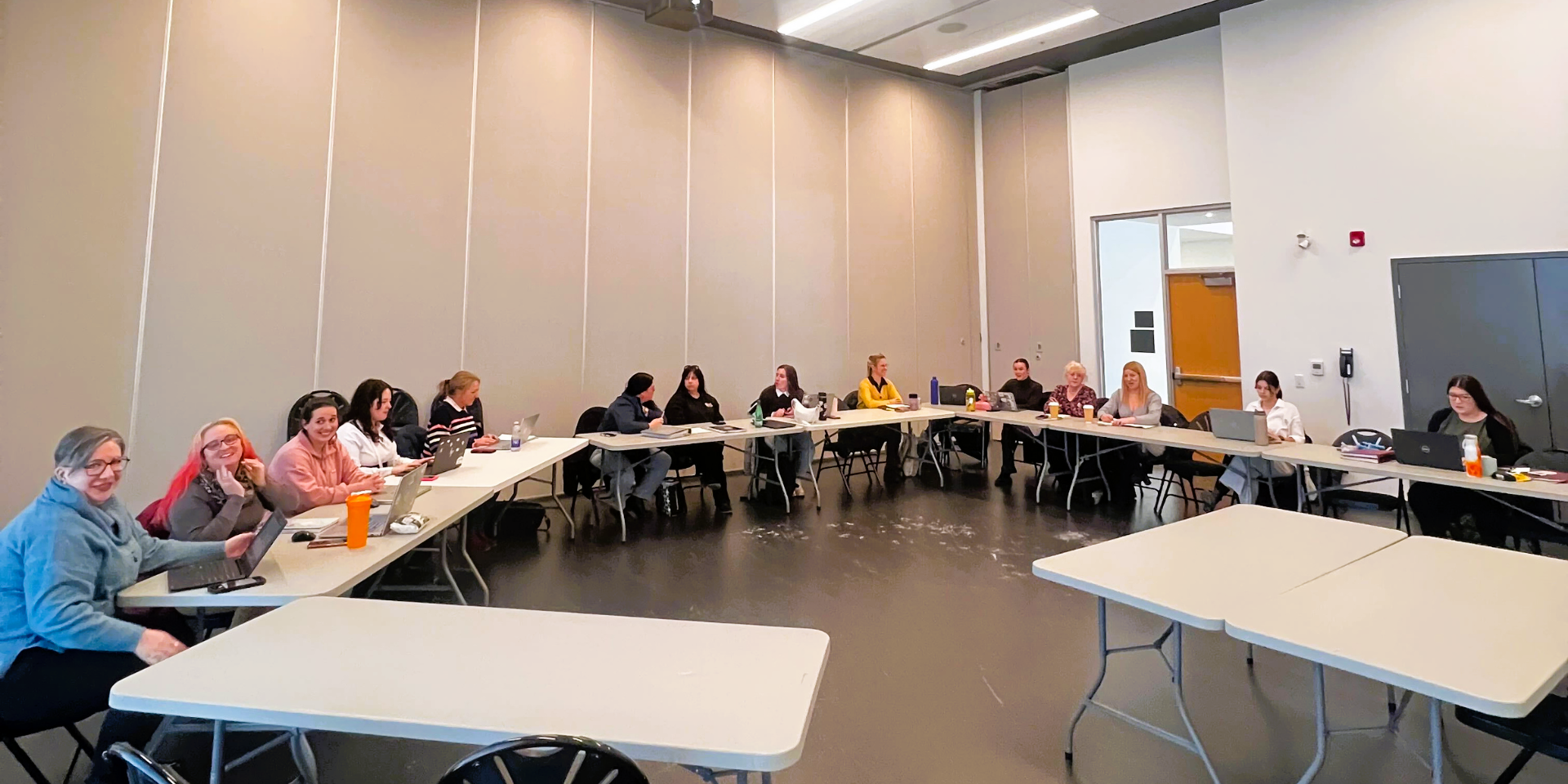
On January 28, 2026, in Lévis (Quebec, Canada), the ICPC took part in a meeting of the Community of Practice of the Fonds bâtir des communautés sécuritaires (FBCS), a public funding program in Quebec that supports local crime prevention initiatives. The meeting aligned with the city’s Territorial Urban Safety Action Plan, ensuring coherence between technical exchanges and locally established priorities. 

What we accomplished on the ground 

We met with institutional, community, school, and municipal stakeholders in the City of Lévis to review progress on FBCS‑related actions, clarify roles and responsibilities, and align interventions with the Territorial Urban Safety Action Plan. We also continued our evaluation mandate for an FBCS‑supported program, ensuring the next steps remain consistent with local priorities. 

What this means for prevention 

This participation helped apply data‑informed practices and improve day‑to‑day coordination among local stakeholders—two conditions that support sustained crime‑prevention outcomes. This work aligns with the ICPC’s mission to strengthen local capacities and inform decision‑making with context‑specific tools. The discussions highlighted as well that FBCS‑supported initiatives gain traction when grounded in collaboration and anchored in daily living settings.

We are grateful to our partners in Lévis for welcoming Solal Holtz and Marie‑Pier Allard‑Caron during this visit. 

ICPC organised a visioning activity

In line with the 2020-2030 Climate Plan and the implementation of Montréal’s Resilient City Strategy, the City of Montreal has decided to support the creation of resilience centres within its territory. This initiative, carried out through the Tandem programme, aims to equip communities to deal with issues of social justice, urban security, and climate change that can have a lasting impact on them.

In this context, the ICPC was mandated to provide methodological support to the project leaders and the team in charge of piloting the implementation of resilience poles in 5 sectors of the municipality: Ahuntsic-Cartierville/St-Laurent, Mercier-Hochelaga-Maisonneuve, Saint-Léonard, Villeray-Saint-Michel-Parc-Extension and Rivière-Des-Prairies-Pointe-aux-Trembles.

With this in mind, on April 29, the ICPC met with the resilience agents, the pilot team, for a visioning activity in the context of the development of community resilience poles.

The purpose of this activity was to better understand the implementation of resilience clusters and the resilience agents over time, to put them in a situation where they were faced with different prospective scenarios, and to define the first milestones for the intervention of the clusters in the short, medium and long term.

We would like to thank all the resilience officers for their participation.

ICPC’s participation in a webinar on the place of youth in the city

On February 4, the Réseau d'échange et de soutien aux actions locales (RÉSAL), of which ICPC is a member, offered a webinar on the place of youth in the city, more specifically on how knowledge and culture can act as protective factors for youth.

The RÉSAL opened a space for discussion to highlight different projects related to knowledge and culture that have a positive impact on the lives of Montreal youth in terms of violence prevention.

The invited panelists included Lucie Caillère, Executive Director of Projet Harmonie, Kémy St-Éloy, Community Coordinator, Prevention Pointe-de-l'Île, Katrina Journeau, Executive Director and co-founder of Prima Danse, and Karine Lavoie, Executive Director of Cirque Hors Piste.

To learn more about their presented projects, please visit the following page: https://www.resal-mtl.com/savoirs-et-culture.