From mistrust to dialogue: essential training session from RÉSAL, coordinated by ICPC

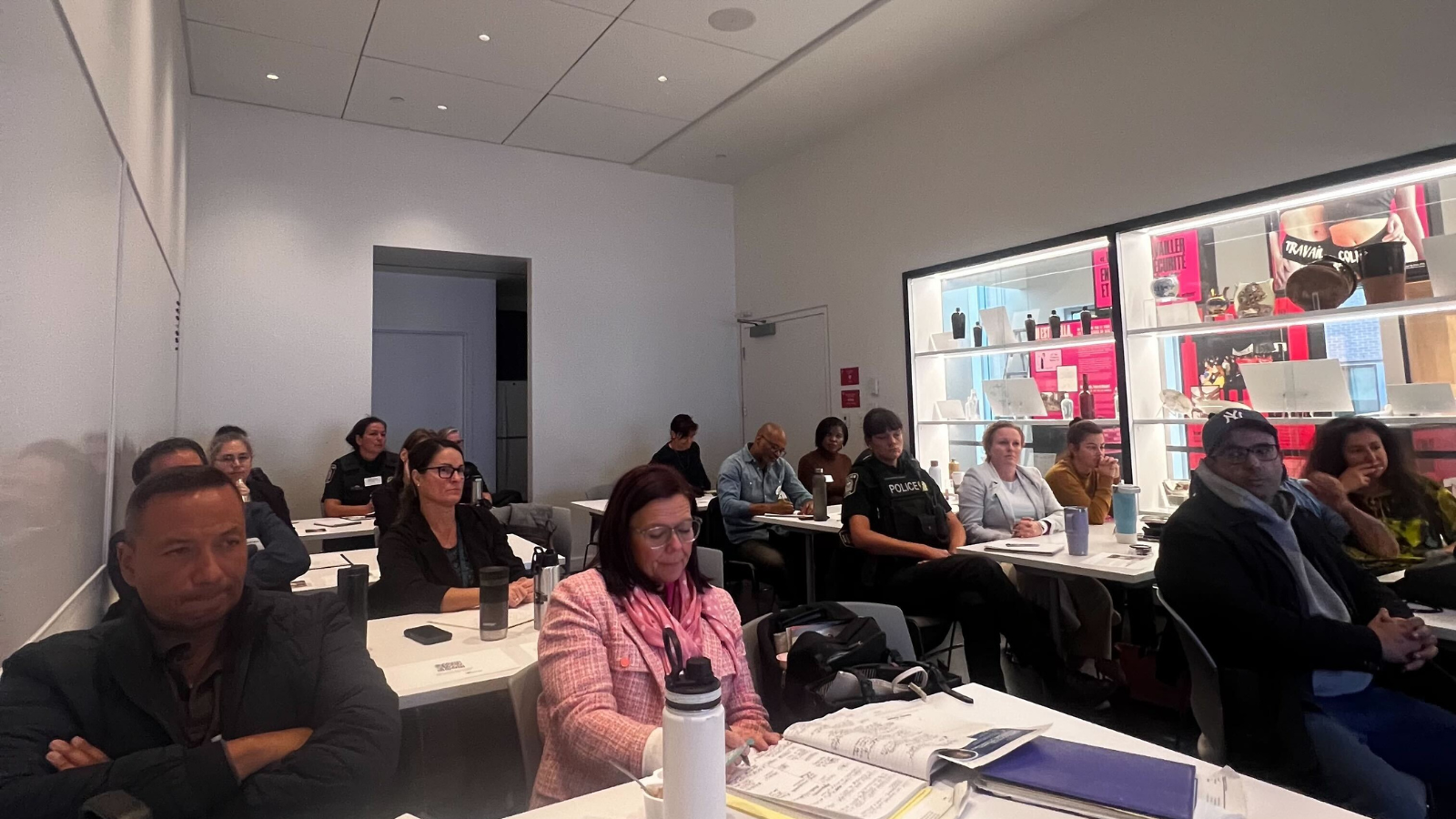
As part of the development of capacity-building activities for the Réseau d’échange et de soutien aux actions locales (RÉSAL) for the fall of 2025, ICPC, as a coordinating member, organized an in-person training session on October 15.

Funded by the City of Montreal’s Prévention Montréal programme, this event focused on ‘Youth and the police: overcoming mistrust, building trust.’ It was delivered by Victor Armony, Professor in the Department of Sociology at UQAM | Université du Québec à Montréal and researcher at the Centre for Interdisciplinary Research on Diversity and Democracy.

At the heart of the training:

✔ Questioning the dynamics of trust

✔ Exploring current challenges and avenues for change

✔ Reaffirming the importance of including young people in any discussion about safety and living together

Why did this training session make a difference?

It is an important step towards approaching issues in a more humane and inclusive manner, rooted in local realities. Trust cannot be decreed; it must be built through listening, respect and a shared future.

We warmly thank Victor Armony and all the participants for their stimulating discussions and insightful reflections!

Training on Migratory Trauma and Youth Mental Health: A RÉSAL Initiative Coordinated by the ICPC 

Funded by the City of Montreal’s Prévention Montréal program, this training session which was held twice (on May 28 and June 19 2025), was attended by almost forty people,  focused on the influence of migratory trauma on the mental health of youth. It was led by Garine Papazian-Zohrabian, Professor in the Département de psychopédagogie et d’andragogie at the Université de Montréal and Scientific Director of the interdisciplinary research team on refugee and asylum-seeking families, Équipe de recherche interdisciplinaire sur les familles réfugiées et demandeuses d’asile (FRQSC). 

The training enabled participants to gain a better understanding of: 

  • The distinction between migration status and life journey; 
  • The impact of violence experienced before and after migration, as well as administrative barriers; 
  • Conditions that foster resilient support (psychosocial support, safe environments, the role of mentors). 

The discussions highlighted the urgent need for an integrated approach that combines psychosocial support, an appropriate legal framework, and actions promoting inclusion. 

The ICPC extends its sincere thanks to Garine Papazian-Zohrabian and all participants for the depth of their contributions and reflections. 

RÉSAL offers a ICPC-coordinated training session in winter 2025

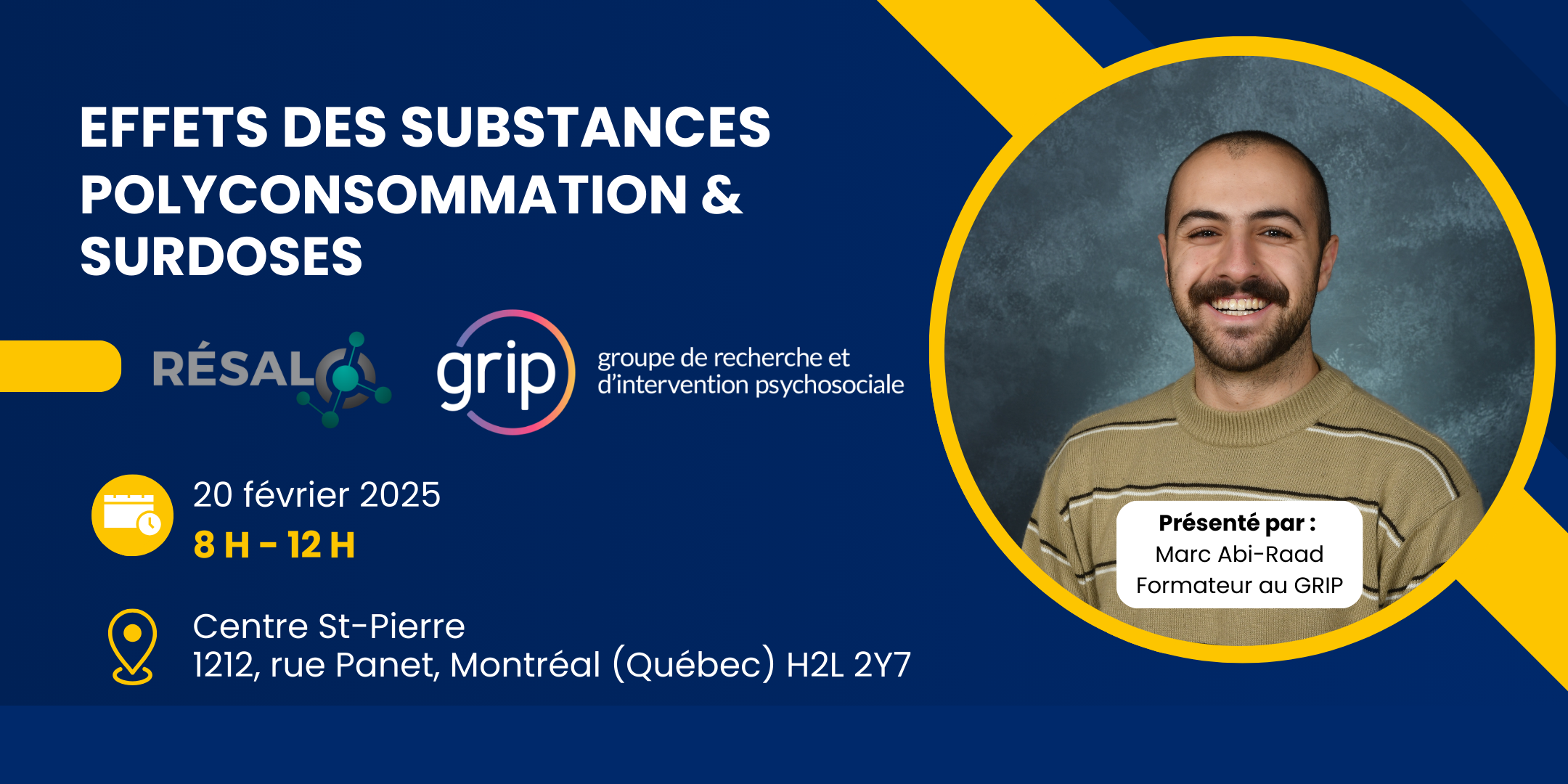
As part of the development of the capacity-building activities of the Réseau montréalais d’échange et de soutien aux initiatives locales (RÉSAL) for the winter of 2025, the ICPC, as a coordinating member, organised an in-person training session on February 20th 2025. Funded by the City of Montréal’s Prévention Montréal program, the event focused on the effects of substances, poly-drug use and overdoses. 

Marc Abi-Raad, a trainer with the Groupe de Recherche et d’Intervention Psychosociale (GRIP), led the course and helped increase knowledge about psychoactive substances. 

Over the course of the day, participants learned how to rigorously classify substances according to their main and sub-categories. The training also enabled them to explore the ways in which psychoactive substances are used and to recognise the signs and symptoms of overdose specific to each category, knowledge that is essential for rapidly identifying emergency situations and intervening effectively. Thanks to this knowledge, they now have a solid basis for taking preventive action and limiting the risks associated with the simultaneous use of drugs. 

Many thanks to Marc Abi-Raad and the participants for the many exchanges that contributed to the success of the event! 

A training course offered in autumn 2024 by RÉSAL, coordinated by the ICPC

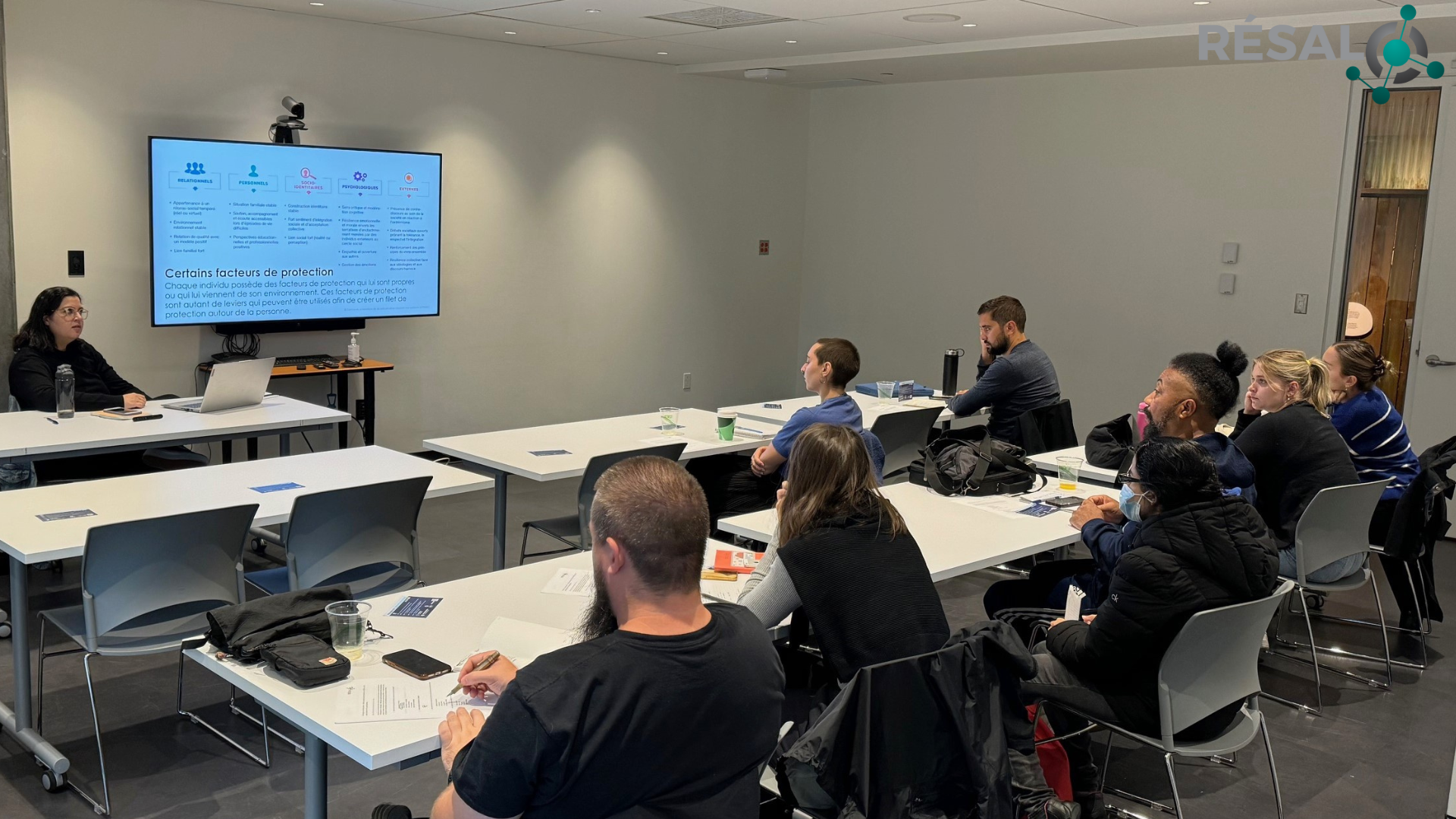
As part of the development   of capacity-building activities for  the Réseau d’échange et de soutien aux actions locales (Network for exchange and local action support, RÉSAL) for autumn 2024, of which the ICPC is a coordinator, a training session funded by the City of Montreal’s Prévention Montréal program was held on September 25, focusing on radicalization leading to violence and acts of hatred.  

Led by Anne-Sophie Bedziri-Prévost, skills development advisor at the Centre for the Prevention of Radicalization Leading to Violence (CPRLV), the course brought together field workers, social development officers and social and legal professionals who  work with youth in the Greater Montreal area.   

The training provided an opportunity to focus on the concepts that are essential to understanding the process of radicalization leading to violence, particularly among young people aged 12 to 25. It also highlighted the different dimensions of violent extremism and the protective factors to prevent and act upstream of these acts of hatred in communities.     

Thank you very much to Anne-Sophie Bedziri-Prévost and the participants for the many discussions that contributed to the success of the event!    

A second edition of a training session by the RÉSAL, coordinated by the ICPC

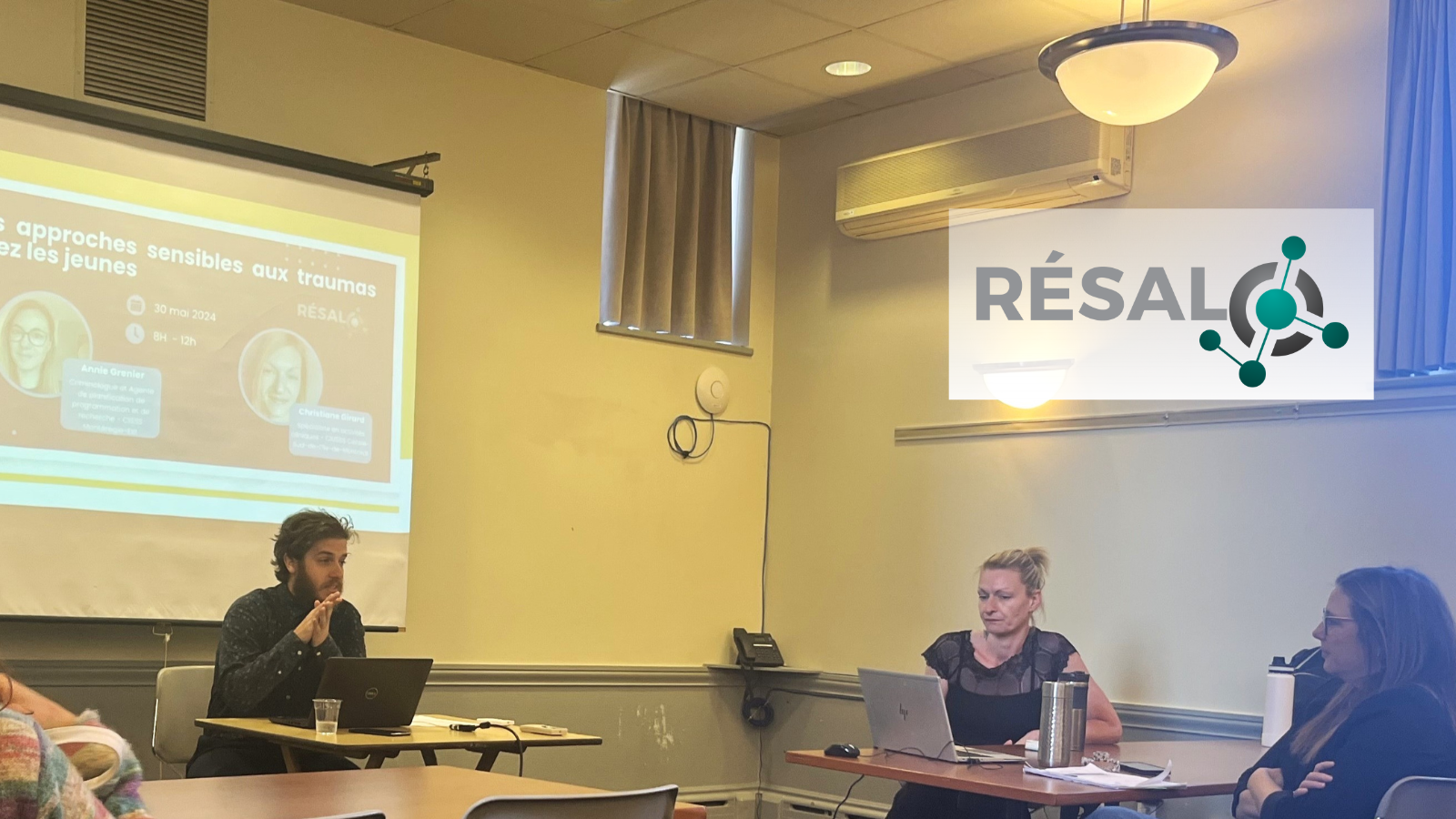
As part of the process of developing the capacity-building activities of the Montreal Network Réseau d’échange et de soutien aux actions locales (RÉSAL), of which the ICPC is a coordinator, a second edition of the training session on trauma-sensitive approaches for youth was held on May 30, 2024, following the success of the first edition, which took place in winter 2024. This event marked the start of a new series of 2024-2025 training sessions funded by the City of Montreal’s Prévention Montréal program. 

Hosted by Annie Grenier, criminologist and program planning and research officer at CISSS Montérégie-Est, and by Christiane Girard, specialist in clinical activities with young offenders at CIUSSS Centre-Sud-de-l’Île-de-Montréal, this training session brought together field workers, social development officers and representatives of community organizations and institutions working with youth in the Greater Montreal area. 

Annie Grenier (CISSS Montérégie-Est)

This training session addressed the distinction between simple and complex trauma, highlighting the variety of traumatic events and their impact on different paths of life, such as attachment, cognition, and emotion regulation. It also emphasized the importance of attentive listening and reception, rather than investigation when working with young victims of trauma. Practical case studies were also presented. 

Christiane Girard (CIUSSS Centre-Sud-de-l’Île-de-Montréal)

Thank you very much to our guest experts and all those who participated in the many exchanges that contributed to the success of the event!    

Two activities offered in summer 2023 by RÉSAL as part of its community of practice

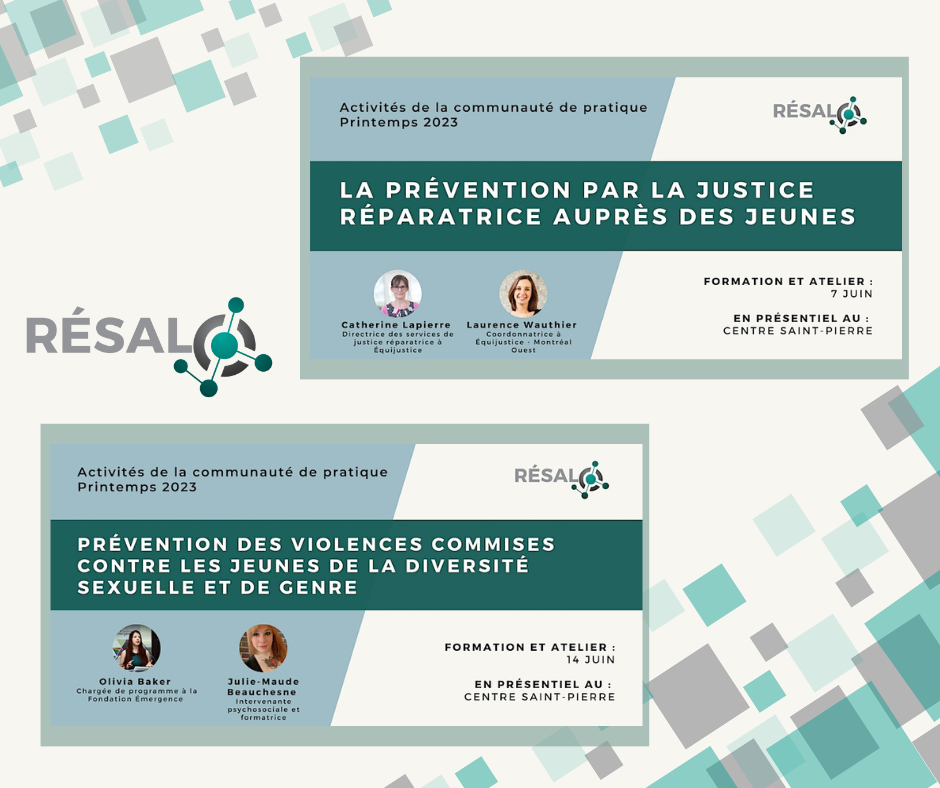
As part of building the community of practice of the Réseau d’échange et de soutien aux actions locales (RÉSAL), of which the ICPC is a member and coordinator, two thematic training cycles were held in summer 2023. One cycle focused on “Restorative justice prevention with young people”, on 7 June, and the other cycle focused on the theme of “Preventing violence committed against LGBTQ+ youth”, on 14 June at the Centre St-Pierre (part 1) and on 31 August 2023 online (part 2).  

The RÉSAL community of practice brings together field workers, community organisations and institutions working with young people in the Greater Montreal area. The aim of these activities, relating to violence committed and suffered by young people aged 12 to 25, was to equip participants to deal with the various problems encountered in their day-to-day work.   

Prevention through restorative justice with young people, Catherine Lapierre, Director of Restorative Justice Services at Equijustice and Laurence Wauthier, Coordinator of Equijustice – Montreal West. .

The aim of this first training session was to provide people affected by crime (victims, perpetrators, witnesses, family members) or conflict with the tools they need to engage in a restorative and mediation process, and to highlight the principles of restorative justice and its importance in offering confidential, safe and respectful listening and discussion forums for all concerned.  

Preventing violence committed against LGBTQ+ youth, Julie-Maude Beauchesne, psychosocial counsellor and trainer, and Olivia Baker, head of the ProAllié programme at Fondation Émergence

For this second training course, in a context of increasing violence against young people from the LGBTQ+ community due to homophobia and transphobia, the workshops provided tools to help prevent such violence, by helping to create an environment where acceptance and inclusion are valued, and to develop the ability to detect problematic situations quickly as well as the means to provide support and assistance.  

A big thank you to the invited speakers and participants for these exchanges that contributed to the success of the events!   

A series of activities by the RÉSAL community of practice will be scheduled for autumn/winter 2023.