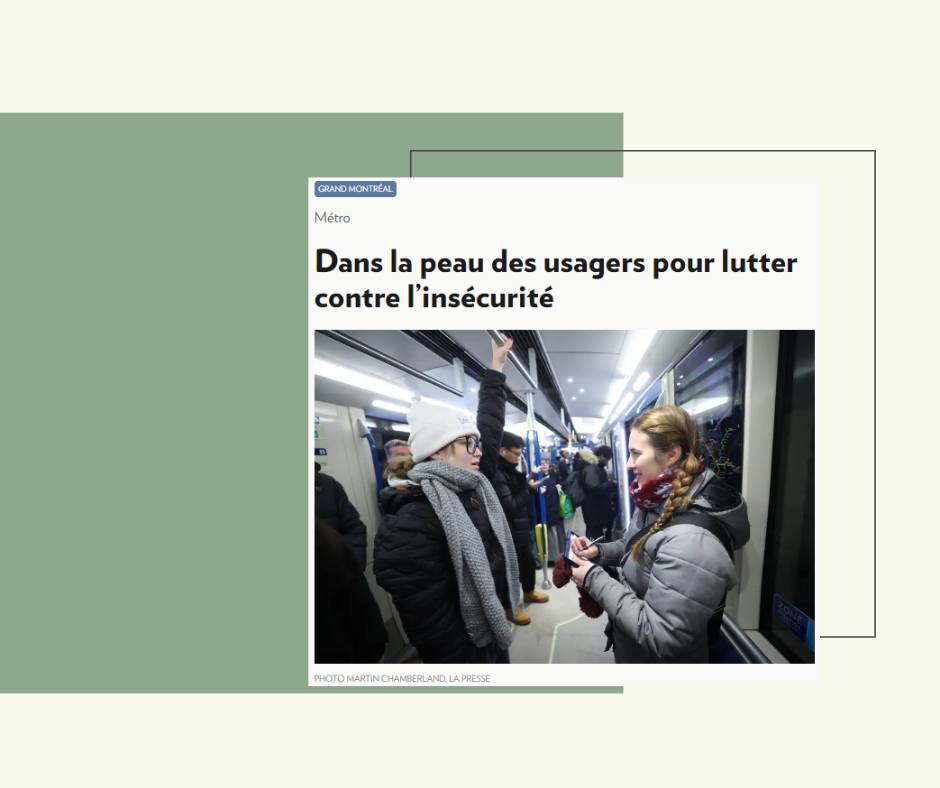
From March 20 to 27, a dozen master’s students in the social sciences at Laval University took to the streets of Lévis on Quebec City’s south shore to engage with the community. Their mission? They were there as part of a major project run by the International Centre for the Prevention of Crime (ICPC) in collaboration with the City of Lévis. The project involved students taking the pulse of the city, tablet in hand
Working in pairs, the students visited a number of strategic areas to circulate a questionnaire among the population. The objective was to achieve a broad representation of the city’s demographics, particularly the younger segment that is often underrepresented in conventional consultations. The gamble paid off: 759 people took the time to respond, including 1 in 10 under the age of 25. The initiative’s success is further underscored by the fact that 1 in 10 respondents were under the age of 25.
These future professionals are immersed in the world of applied research. From the initial call for tenders to the analysis of the results, they are involved in every stage of the project. The next stage is the quantitative analysis of the data provided by the City, which will be carried out in small groups. In mid-April, Maxime Raulet, a ICPC analyst and project officer, will participate in evaluating the process
This field project seamlessly integrates learning, civic engagement and tangible impact for the community, showcasing a remarkable example of collaboration between the university, the city and the ICPC.